Challenges to the Death Penalty Leading to it Being Declared Unconstitutional
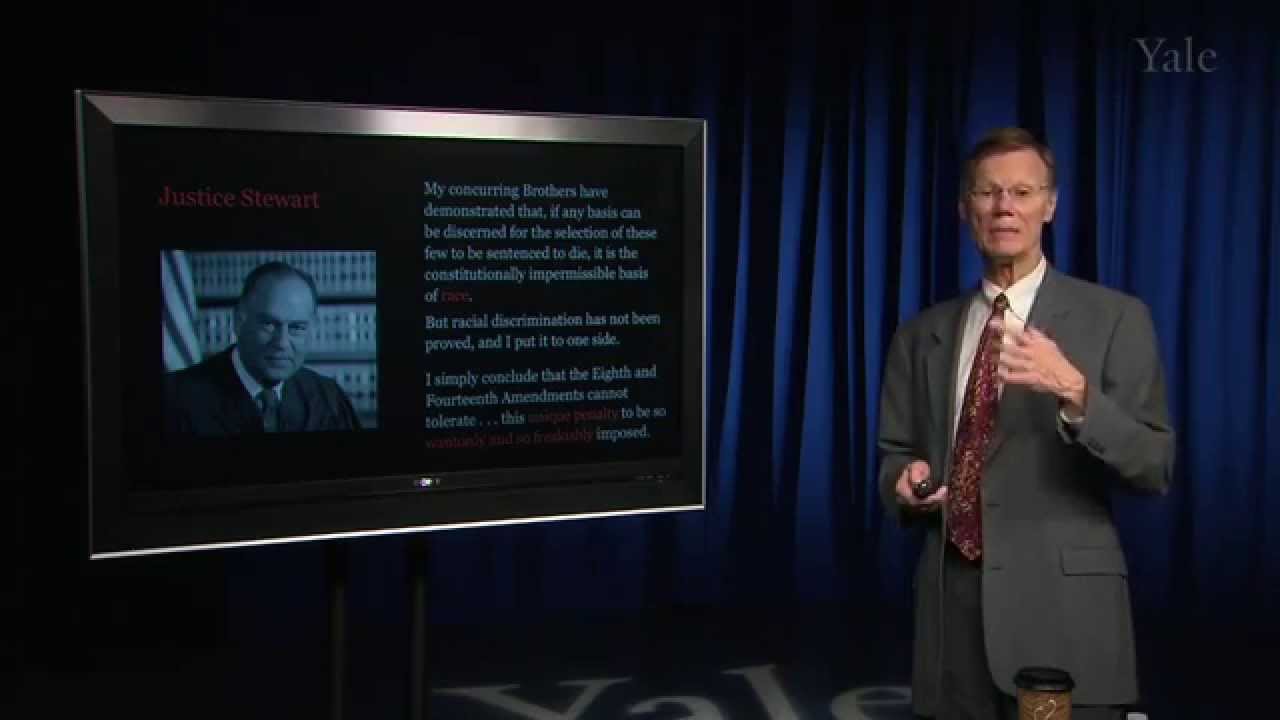
Stephen Bright, teaching Capital Punishment: Race, Poverty, and Disadvantage at Yale, walks through the Supreme Court's path to declaring the death penalty unconstitutional. He starts with the Court's 1971 rejection of a due process challenge, then turns to Furman v. Georgia in 1972, where five justices found capital punishment cruel and unusual under the Eighth Amendment despite writing five separate rationales, while four dissented. Bright explains how states responded by rewriting their statutes to fix the defects Furman identified, setting up the Court's 1976 rulings on five state laws that upheld some and struck down others. The lecture treats the case law as a live legal argument rather than settled doctrine, tracing how the reasoning in these decisions continues to shape how death sentences are imposed today. It draws on assigned readings including the McGautha and Furman opinions.