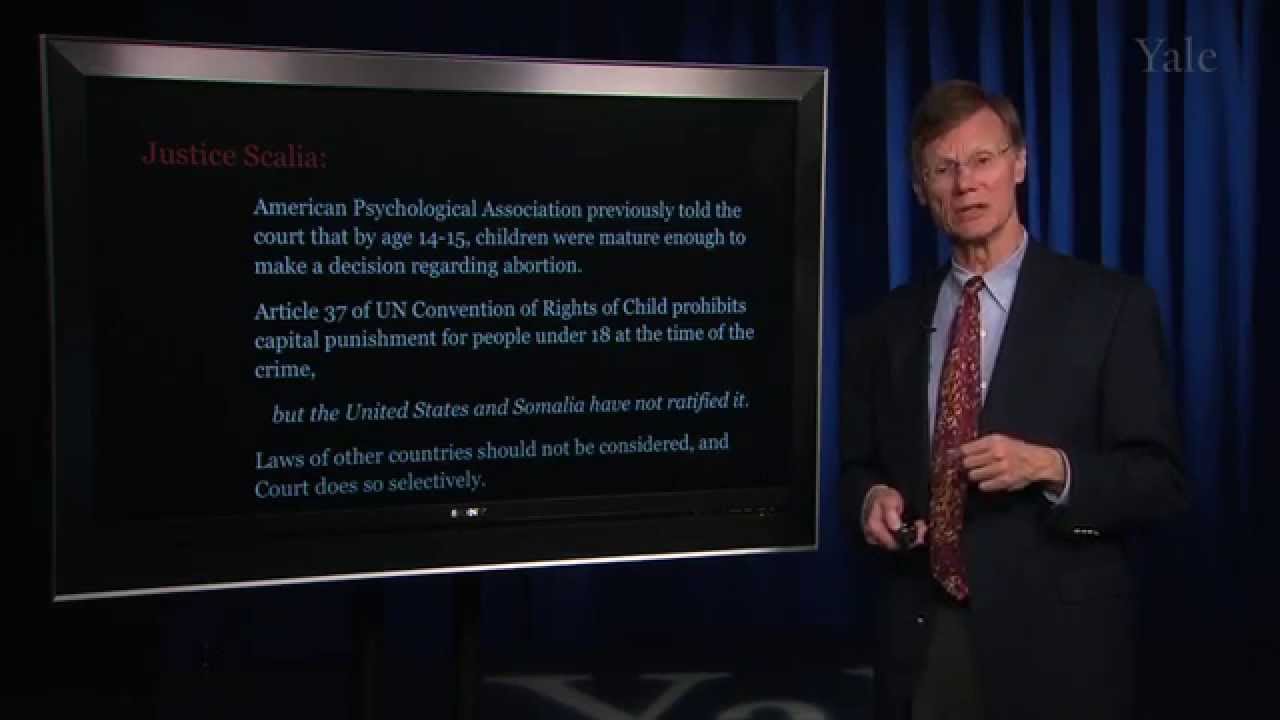
Proportionality – Part II
Stephen Bright, teaching Yale's course on capital punishment, race, poverty, and disadvantage, examines the Supreme Court's proportionality doctrine in death penalty law. The premise that capital punishment is reserved for the worst of the worst offenders runs into a body of case law limiting it further still. Bright walks through the decisions holding execution excessive for crimes where the victim was not killed, and for categories of offenders including the intellectually disabled and those who were under 18 at the time of the offense. The lecture traces how the Court has drawn these lines case by case, building on assigned readings covering the doctrine, and treats proportionality as a live constitutional limit rather than a settled rule. It is one segment of a longer class session on proportionality, aimed at students already working through the underlying case materials.