Upholding Some Death Statutes But Not Others: The Court's 1976 Cases
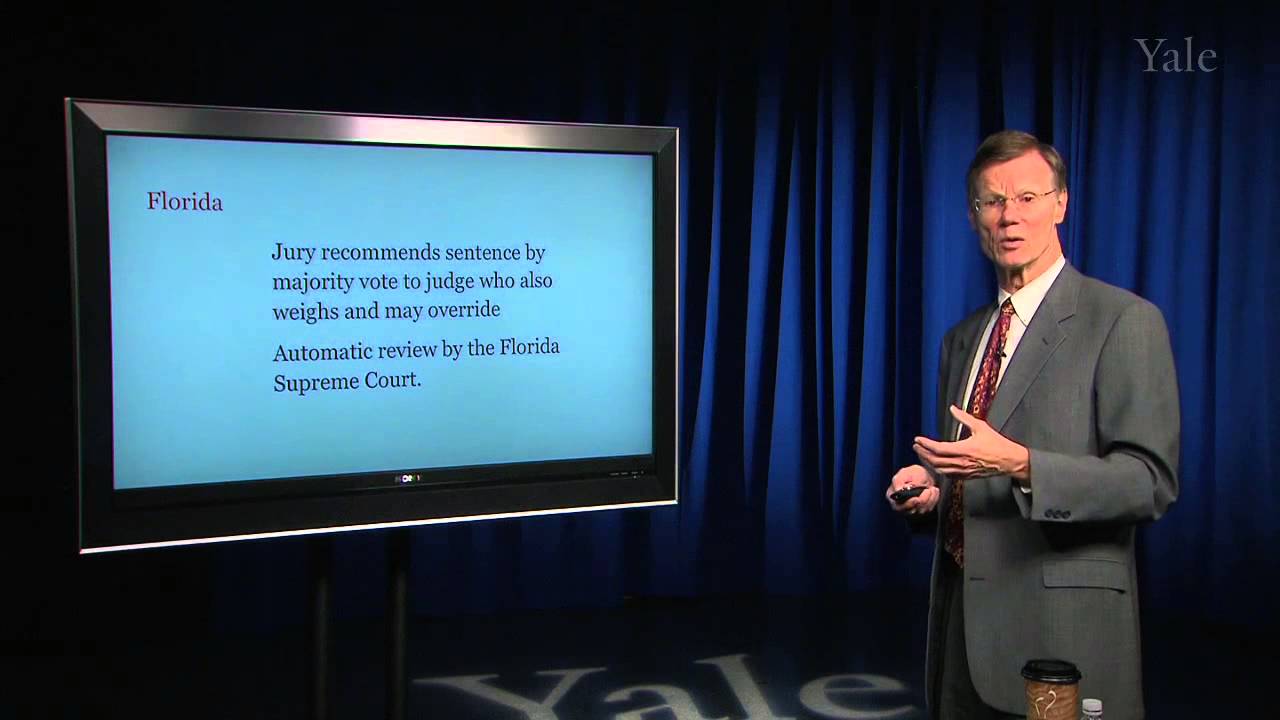
Stephen Bright, teaching a Yale course on capital punishment, walks through the Supreme Court's 1976 rulings that reshaped American death penalty law. He explains how the Court upheld new statutes from Georgia, Florida, and Texas because they required juries to weigh specific factors before imposing death, guarding against arbitrary or 'unusual' sentences. He contrasts these with the mandatory death penalty laws of North Carolina and Louisiana, which the Court struck down for removing that individualized judgment. Bright traces the legal reasoning state by state, showing how the same year produced opposite outcomes depending on whether a statute left room for discretion. The lecture assumes some familiarity with the earlier Furman v. Georgia decision and treats 1976 as the moment the modern capital punishment system took its current shape, with sentencing guidelines built around aggravating and mitigating factors.