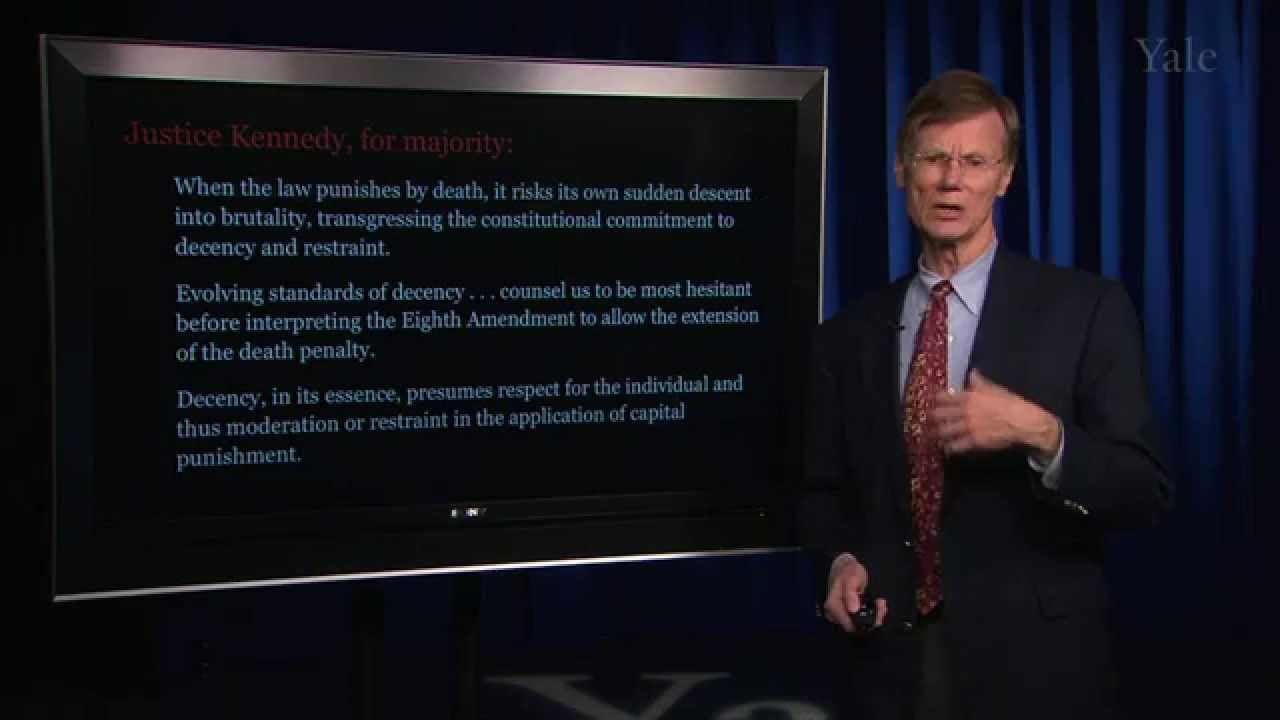
Proportionality – Part I
Stephen Bright, teaching Capital Punishment: Race, Poverty, and Disadvantage at Yale, examines the constitutional doctrine of proportionality in death penalty cases. The death penalty is supposed to be reserved for the worst of the worst, and this lecture works through the Supreme Court decisions that carved out exceptions to that principle, including rulings barring execution for crimes where the victim was not killed and for offenders who are intellectually disabled or were under 18 at the time of the offense. Bright walks through the Court's reasoning on excessiveness and disproportionality, tying the case law to the class readings on capital sentencing. The segment sets up the legal framework that later parts of the course apply to specific categories of offenders, treating proportionality as the doctrinal hinge on which much of death penalty jurisprudence turns.