Circulation of the Atmosphere
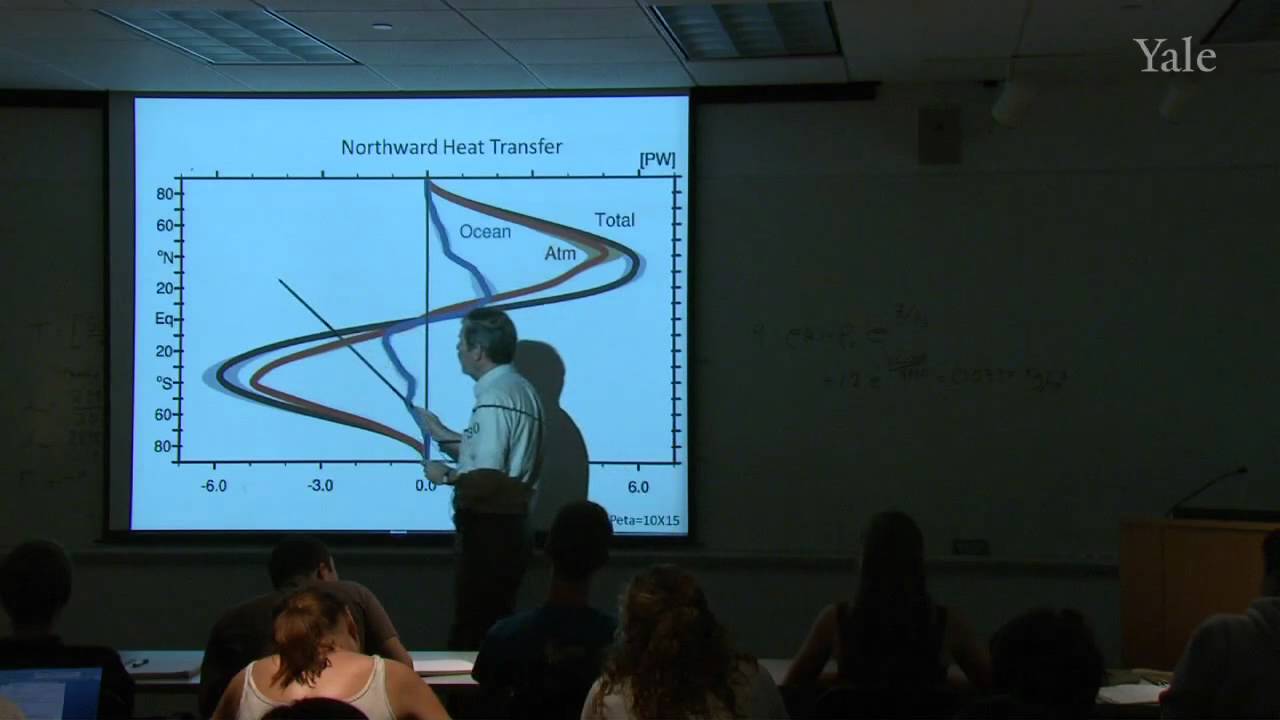
Ron Smith teaches this lecture from Yale's Atmosphere, the Ocean and Environmental Change course, covering the physics behind global atmospheric circulation. After reviewing exam solutions, Smith explains the latitudinal gradient of heat caused by the tilt of Earth's axis, which produces both seasonal fluctuations and a net surplus of solar heating near the equator. He walks through how the ocean and atmosphere work together to transfer that excess heat poleward, restoring the planet's energy balance, and quantifies heat flux carried by moving air. The lecture then turns to the Coriolis force, showing how Earth's rotation deflects moving air and water, and how this deflection breaks the atmosphere into three distinct circulation cells per hemisphere, each carrying heat toward the poles. Chapter markers separate the exam review from the substantive content on heating, transport, and rotation effects.