Water in the Atmosphere II
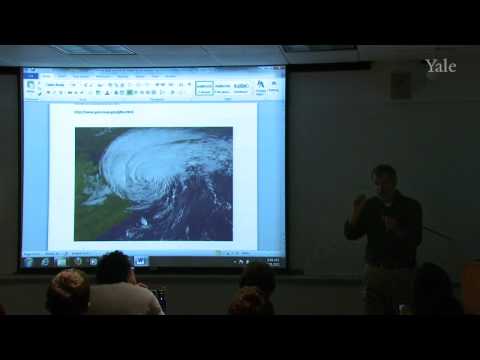
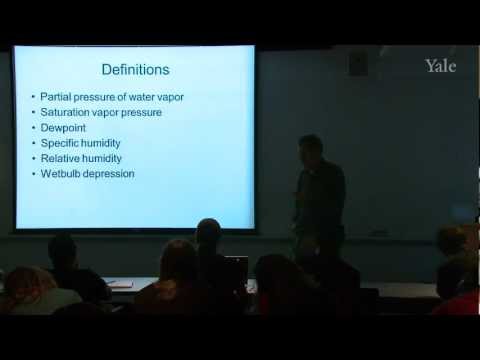
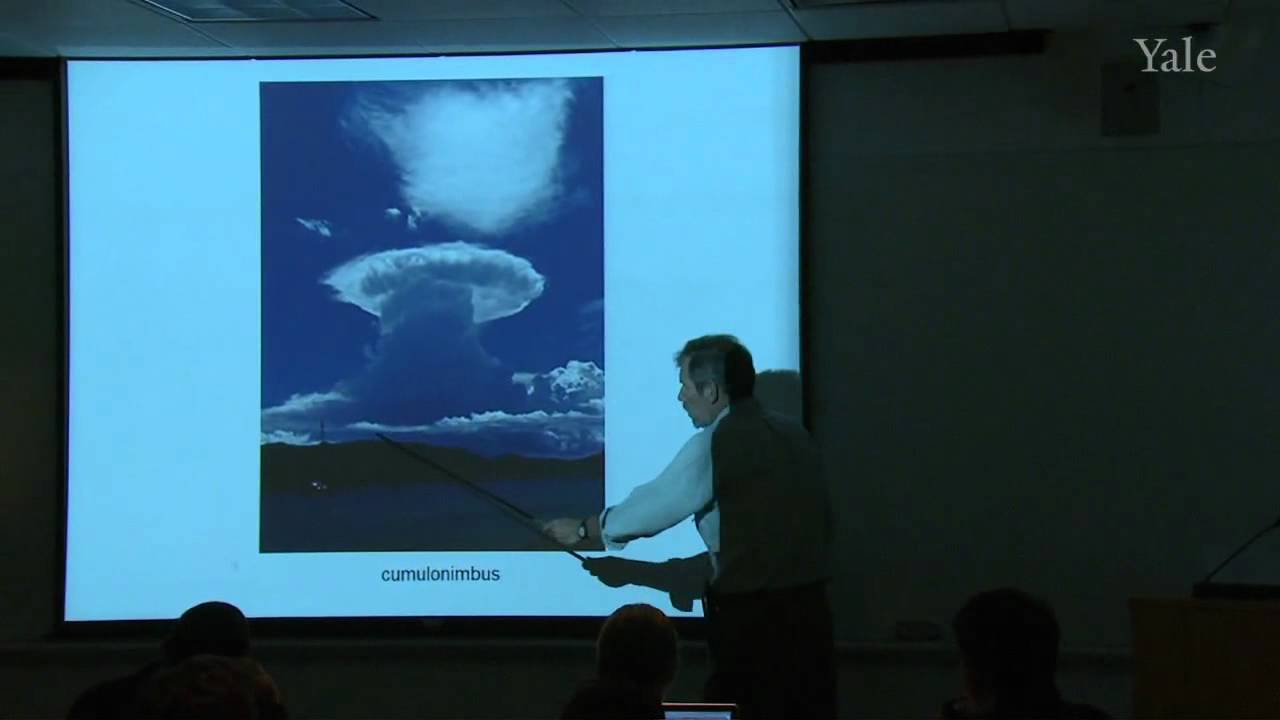
Yale professor Ron Smith continues his atmospheric water lecture in this session from Atmosphere, the Ocean and Environmental Change (GG 140). He explains saturation vapor pressure, the temperature-dependent limit on how much water vapor air can hold, and what happens when that limit is exceeded and condensation begins. The lecture works through cloud types and their distinguishing features, then turns to vortices, the low pressure funnel-shaped rotating structures seen in tornadoes, describing how the pressure drop drives condensation. Smith also covers haze, formed when water condenses onto pollution particles, satellite views of clouds, and the balance of liquid water versus ice within clouds. Chapter markers divide the recording into saturation vapor pressure, effects of exceeding it, cloud types, vortices, haze and pollution, space views of clouds, and cloud liquid and ice. Recorded in Fall 2011 as part of Yale's Open Yale Courses series.