Global Climate and the Coriolis Force
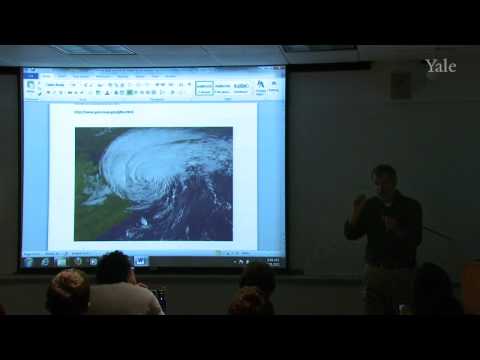
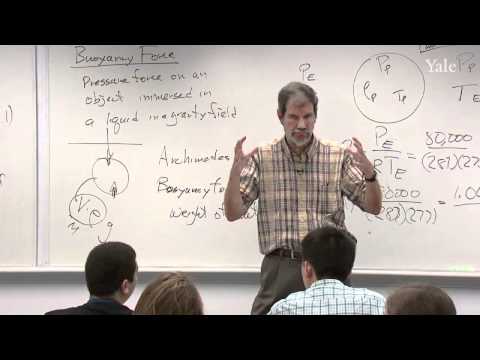
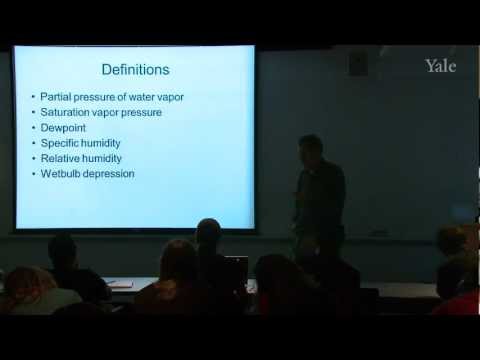
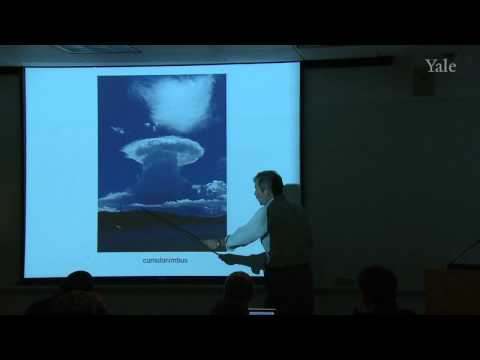
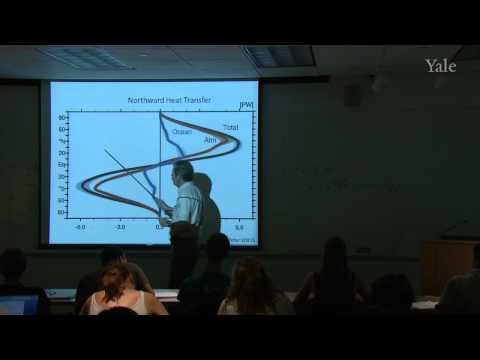
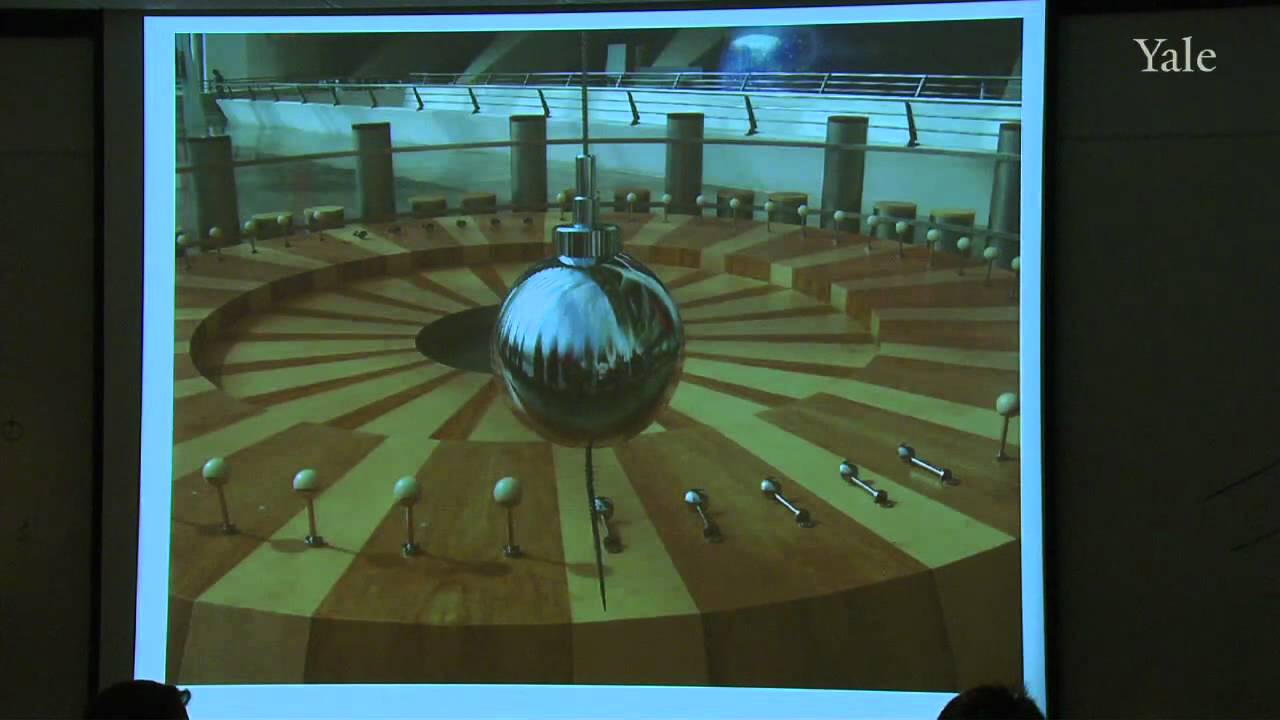
Ron Smith, teaching Yale's Atmosphere, the Ocean and Environmental Change, explains why the atmosphere organizes into three circulation cells per hemisphere rather than one simple loop from equator to pole. He walks through geostationary satellite images of cloud patterns to show these cells in action, then defines the climate terminology needed to discuss them before turning to the physics: Earth's rotation generates the Coriolis force, deflecting motion right in the northern hemisphere and left in the southern. Smith develops the concept of geostrophic balance, where the Coriolis force counteracts the pressure gradient force, and uses it to explain why cyclones and anticyclones spin in opposite directions in each hemisphere. The lecture moves from descriptive observation to the dynamical reasoning that accounts for it, closing with the balance equations that govern large-scale atmospheric motion.