Climate Sensitivity and Human Population
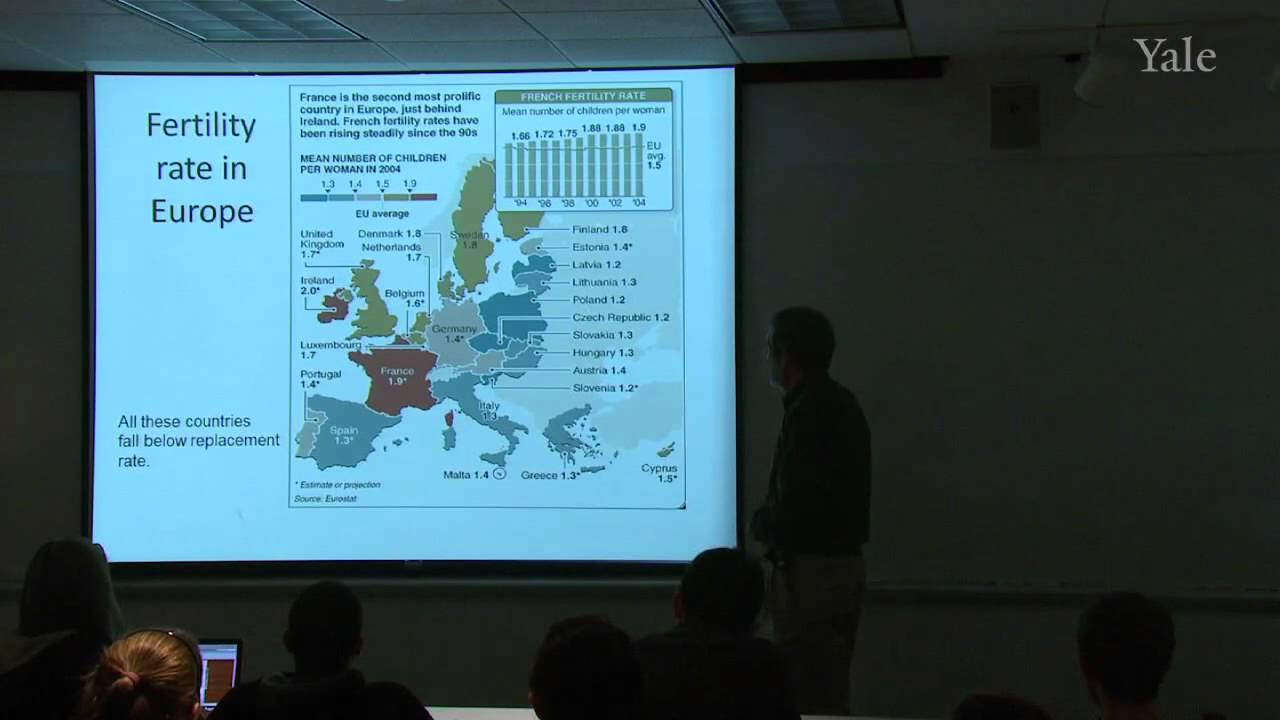
Ron Smith of Yale's Atmosphere, the Ocean and Environmental Change course explains how scientists define climate sensitivity, the temperature change expected from doubling atmospheric carbon dioxide or from a 1 W/m2 increase in radiative forcing. He starts with the simplest version, black body sensitivity derived from the Stefan-Boltzmann Law, then shows why it underestimates warming compared to values calculated from a century of temperature records and roughly 200,000 years of ice age data, pointing to feedbacks as the difference. The second half turns to world population, tracking growth trends across developed and developing countries, exponential growth, population density, and urbanization, closing with the demographic transition and the population pyramid as tools for thinking about sustainable population size. Recorded at Yale in Fall 2011, the lecture links physical climate mechanics to the human numbers driving emissions.