Coriolis Force and Storms
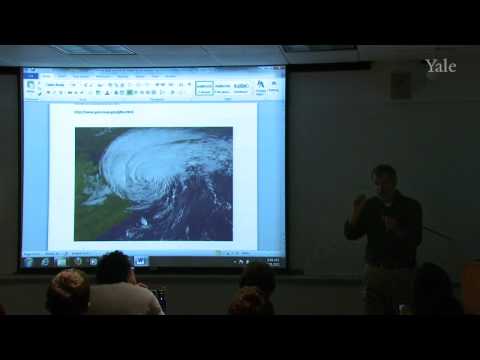
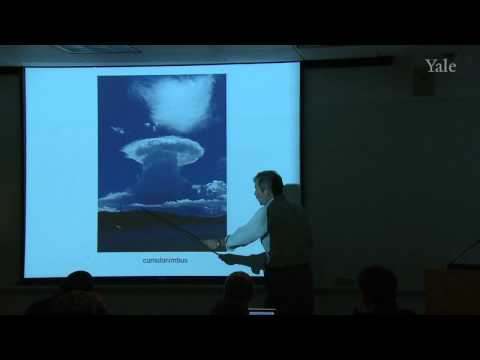
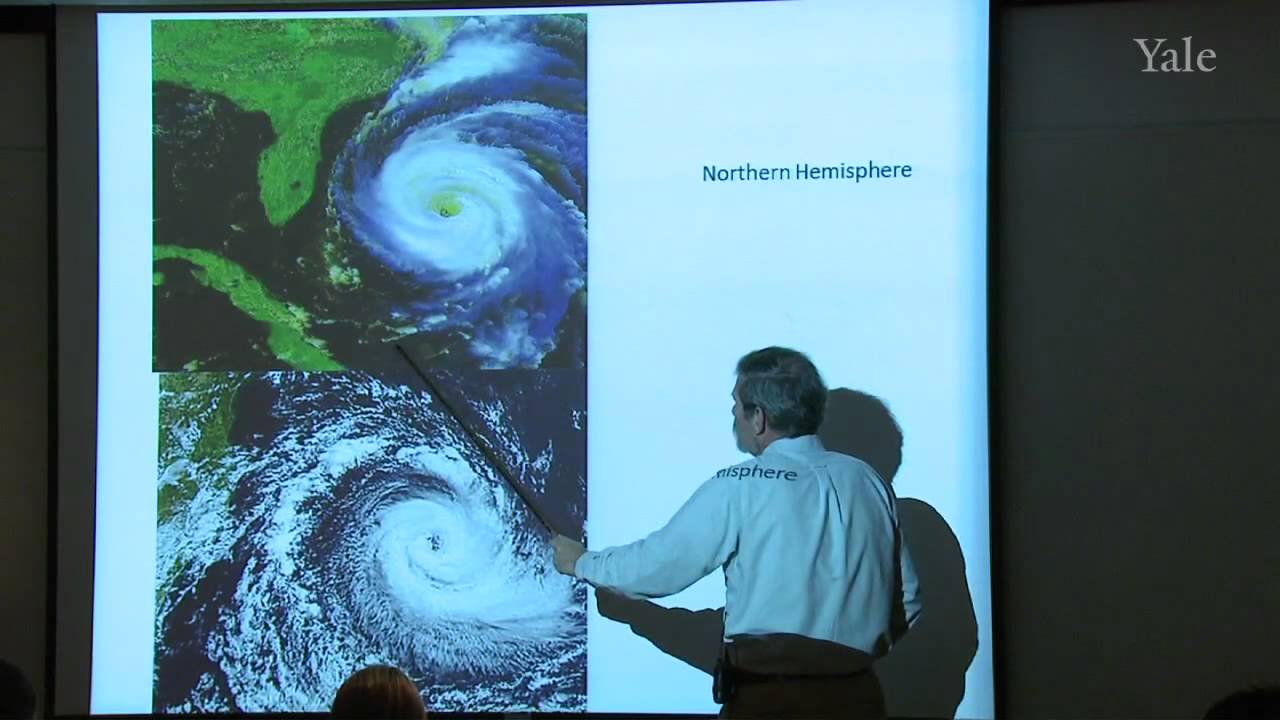
Ron Smith of Yale's Atmosphere, Ocean and Environmental Change course explains why large scale winds above the surface settle into geostrophic balance, with rotating flow around high and low pressure systems produced by the tug between pressure gradient force and the Coriolis force. He shows how this rotation reverses direction across the equator, visible directly in satellite images of hurricanes spinning opposite ways in the northern and southern hemispheres, and takes a detour to debunk the toilet bowl myth about Coriolis effects on draining water. The second half turns to storm formation itself, distinguishing convective and frontal storms and walking through how airmass thunderstorms develop into severe thunderstorms. Lecture chapters move from weather map pressure anomalies through geostrophic adjustment to storm classification, giving a clear physical account of why storms rotate the way they do and what separates an ordinary thunderstorm from a severe one.