Forward and Futures Markets
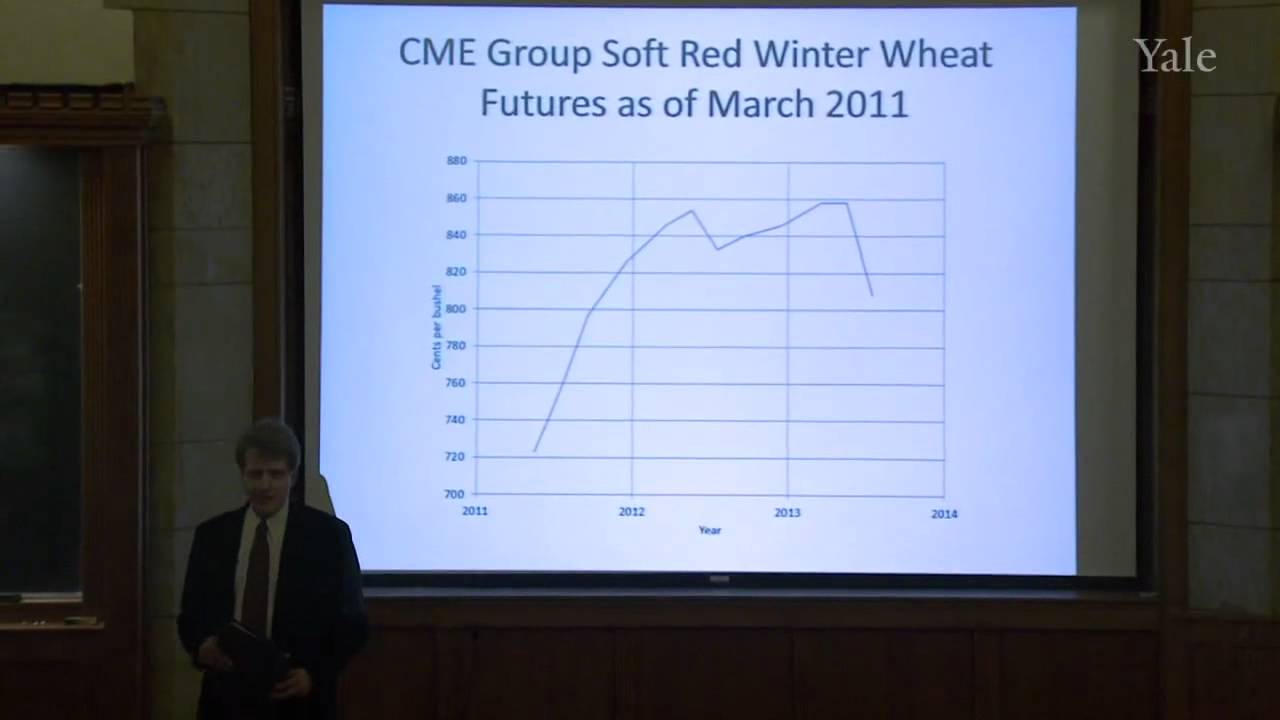
Robert Shiller, teaching Yale's Financial Markets course, lays out how forwards differ from futures and why futures markets exist to reveal expected future prices for commodities and financial assets. He traces the mechanics back to Dojima, Japan, the first organized futures market, then uses wheat futures to explain contango, backwardation, margin accounts, counterparty risk, and the fair value formula for pricing a futures contract. A long middle section follows the oil futures market from the 1870s through the 1970s oil crises to the 2008 price spike, using that history to test how well futures predict where prices actually go. Shiller closes with S&P 500 index futures and the contrast between physical delivery and cash settlement. Chapter markers break the seventy three minute lecture into eight segments, from opening definitions to a closing discussion of how hard forecasting remains even with a functioning futures market.