Frontal Cyclones
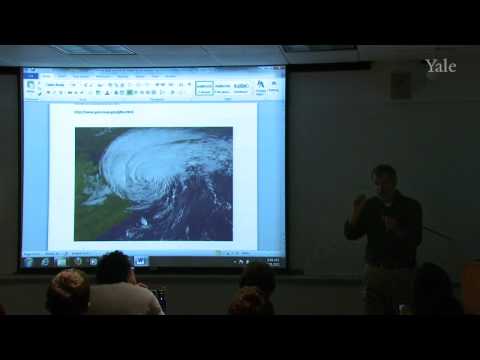
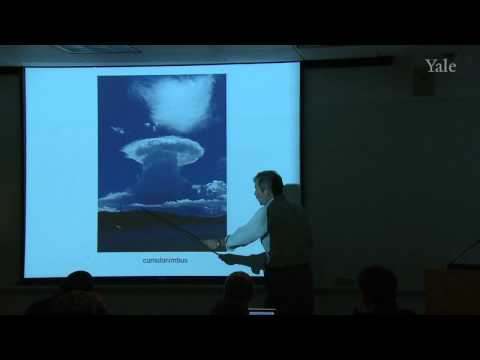
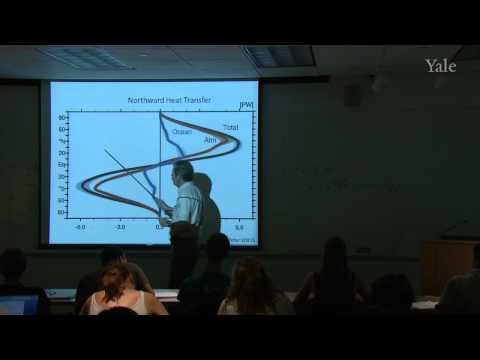
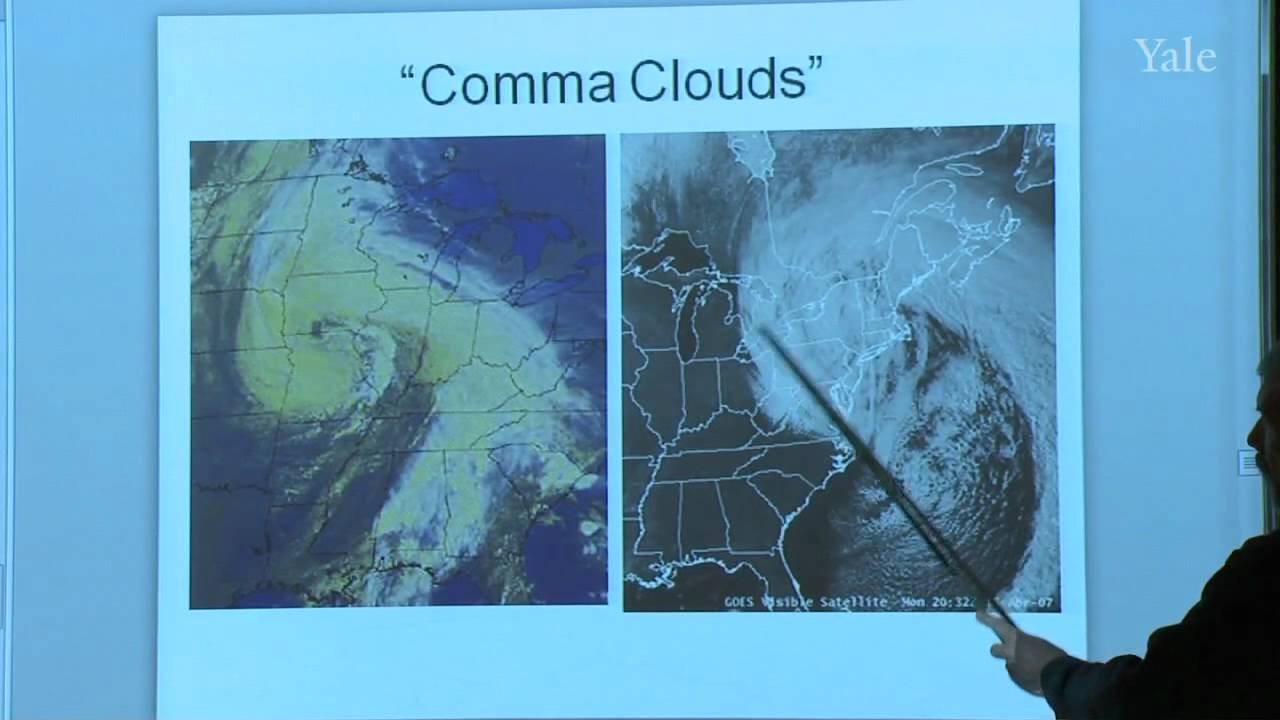
Ron Smith, in this Yale lecture from The Atmosphere, the Ocean and Environmental Change, explains how mid-latitude frontal cyclones form and move. He contrasts them with convective storms, showing that frontal cyclones draw energy from temperature gradients rather than latent heat release, and that they travel west to east within the belt of westerly winds in both hemispheres. Smith traces the lifecycle of a storm from a kink in the polar front to the full development of warm and cold fronts around a low pressure center. He uses the nor'easter, common in New England and named for the northeasterly winds that arrive before it, as a worked example, then compares cyclone behavior in the southern hemisphere. The lecture closes with a discussion of how forecasters use these storm models to predict weather. Chapter markers divide the class into five sections covering formation, lifecycle, the nor'easter case study, southern hemisphere storms, and forecasting.