Ice in the Climate System
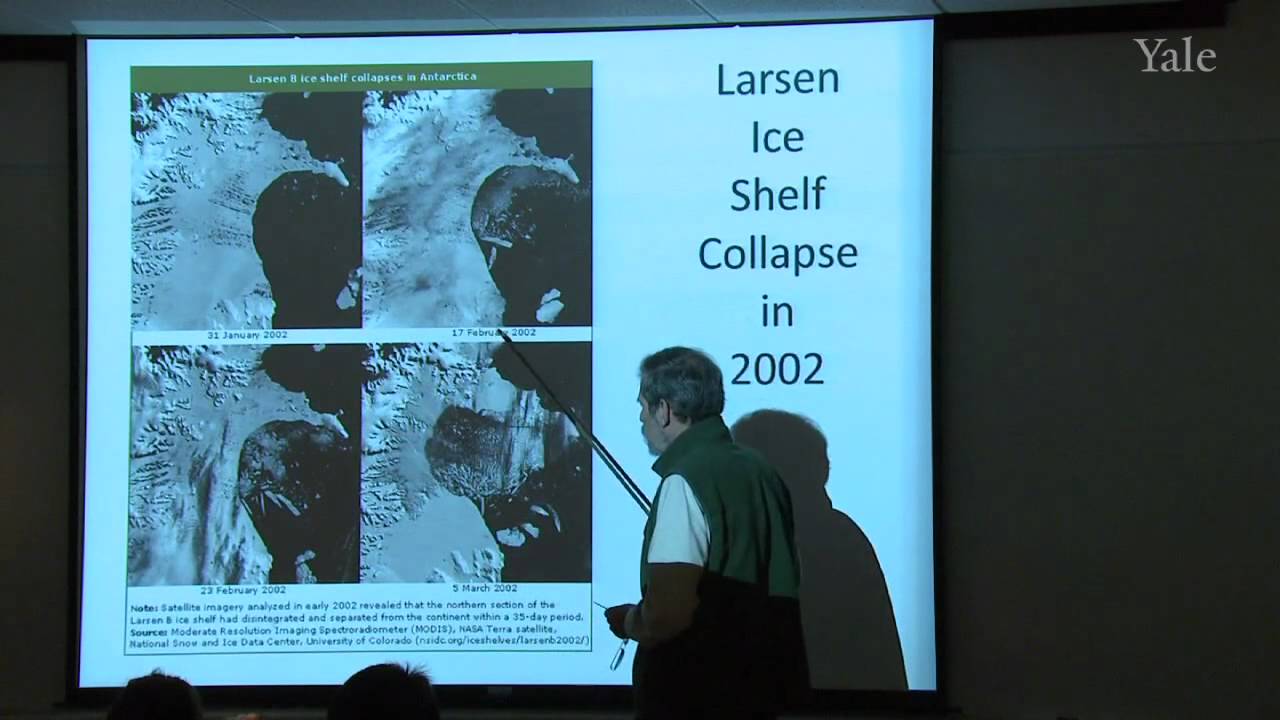
Ron Smith, teaching Yale's Atmosphere, Ocean and Environmental Change (GG 140), lays out the five forms of ice in the climate system. He covers sea ice, which forms when ocean water cools to about -2°C and is found today in the Arctic Ocean and around Antarctica, then moves to ice sheets built up from compacted snow on land. He explains how an ice sheet becomes an ice shelf once it reaches the ocean and stays continuous with the land ice, distinguishes icebergs as broken-off chunks that drift with wind and currents or ground in shallow water, and closes with mountain glaciers, which appear at high latitudes and, at sufficient elevation, even near the equator. Recorded in Fall 2011, the lecture moves chapter by chapter through each ice type with attention to formation processes and present-day locations, giving a systematic physical picture of how ice behaves across the planet's climate system.