Ocean Currents and Productivity
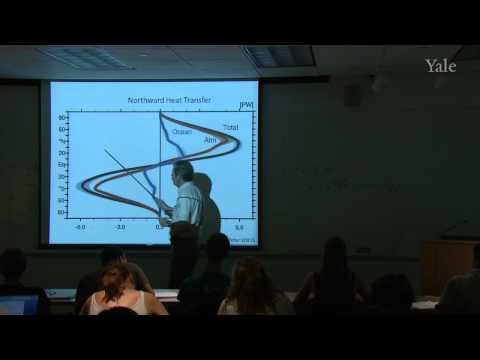
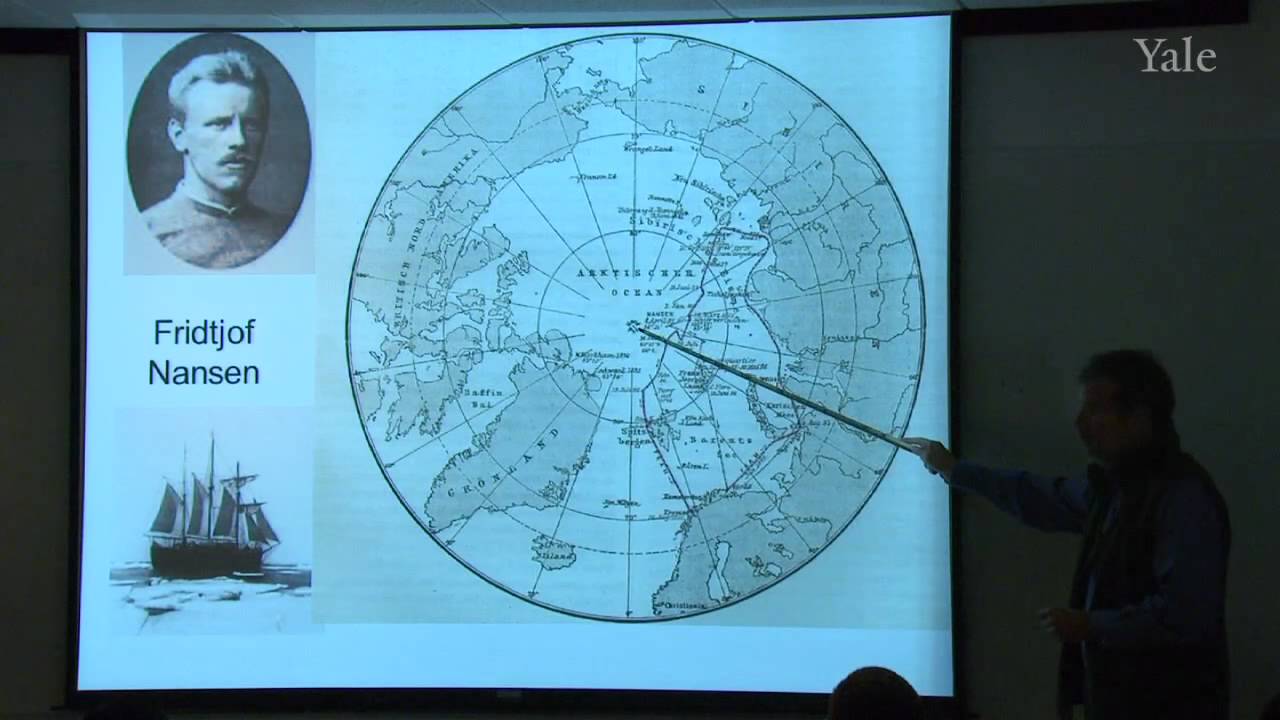
Ron Smith, teaching Yale's Atmosphere, the Ocean and Environmental Change, explains how ocean currents form and why they matter for marine life. He divides currents into thermohaline and wind driven types, both forced remotely rather than locally, and walks through how wind stress piles up water to create pressure gradients that the Coriolis force then balances into geostrophic currents. The lecture covers gyre circulation in the Atlantic and Pacific, then moves through the Southern, Arctic, and coastal systems, tracking how water and heat move across basins. The final chapter ties the physics to biology, showing why equatorial and coastal upwelling zones, where nutrient rich deep water reaches sunlit surface layers, are the ocean's most productive regions. Chapter markers break the fifty minute recording into eight segments, from basic current types to regional circulation to productivity patterns, giving a clear physical explanation for where ocean life concentrates.