Bayesian Nash Equilibrium: Applications
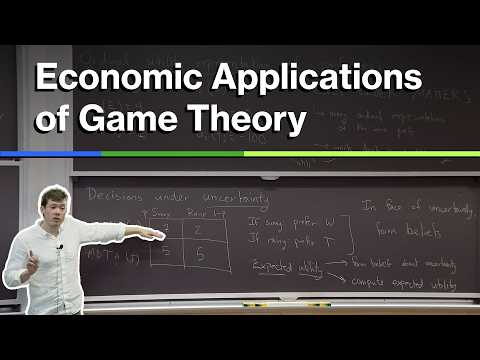
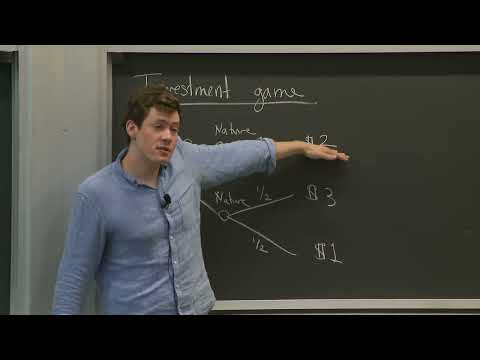
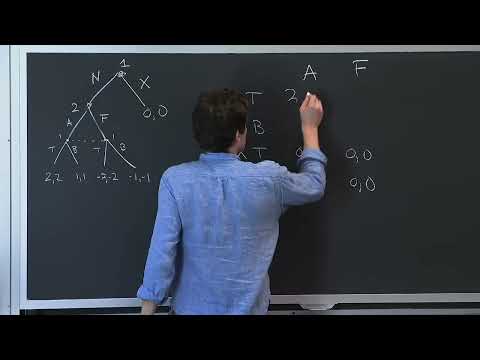
Ian Ball continues MIT's 14.12 Economic Applications of Game Theory with a lecture on Bayesian Nash Equilibrium, focusing on how the concept plays out in concrete settings. He works through Cournot competition under incomplete information, showing how firms choose quantities when they are uncertain about rivals' costs, and then moves to auction theory, analyzing how bidders with private valuations form equilibrium strategies. The lecture builds directly on the prior session's definitions, applying the formal machinery of Bayesian games to these two canonical economic models. Ball works through the equilibrium conditions on the board, deriving best-response functions and solving for equilibrium bids and quantities step by step. The seventy-minute session is aimed at students who already have the basic definition of Bayesian Nash Equilibrium and are ready to see it used to solve real strategic problems in market competition and auction design.