Lecture 12: Finitely Repeated Games
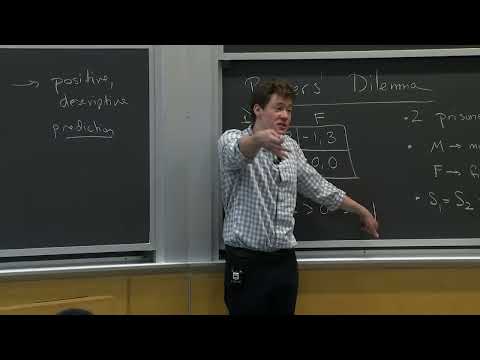
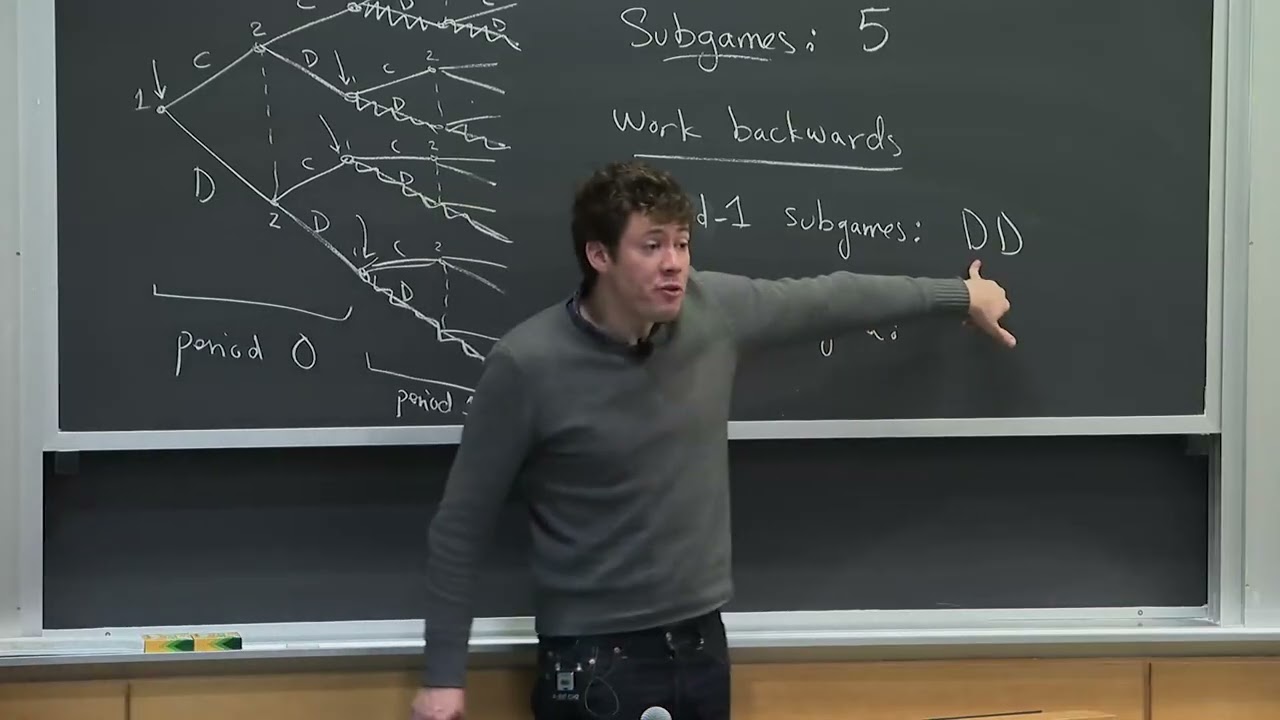
Ian Ball continues MIT's 14.12 Economic Applications of Game Theory with a session on finitely repeated games. The class opens by actually playing the Prisoner's Dilemma, then Ball uses the results to build out the theory of what happens when a stage game is repeated a known, finite number of times. He works through why cooperation that seems sustainable in an infinitely repeated setting tends to unravel once players know exactly when the game ends, using backward induction from the final round. The lecture builds on earlier sessions in the course's game theory sequence and assumes familiarity with basic strategic-form games and Nash equilibrium. It runs 77 minutes as a full class session, chalkboard-style, with student participation in the opening game. Part of MIT OpenCourseWare's Fall 2025 offering of 14.12, taught to economics graduate and advanced undergraduate students.