Implicit Cartels
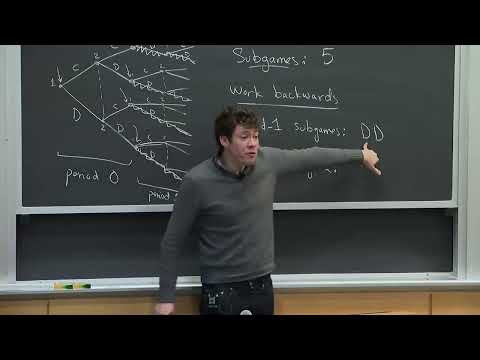
MIT economist Ian Ball examines how firms sustain cartel-like coordination without explicit agreements, in this lecture from MIT's course 14.12, Economic Applications of Game Theory. Ball uses game theory to explain how repeated interaction among independent market participants can sustain tacit collusion, letting firms avoid price competition and raise joint profits even without a formal agreement. OPEC serves as the running real-world example of cartel behavior, and the lecture builds on earlier repeated-game concepts to show what makes implicit collusion stable or fragile, including the role of monitoring, punishment strategies, and the temptation to deviate. The eighty-one minute session works through the underlying models on the board, aimed at students who have already covered the basics of repeated games and are ready to see how the theory applies to actual market structures.