LECTURES A GRATIS GLOBAL SERVICE
⌕ SEARCH GRATIS GLOBAL ↗
LECTURES
Lecture 14: Folk Theorem
SOURCE: YOUTUBE · NO TRACKING UNTIL YOU PRESS PLAY · TROUBLE PLAYING? WATCH AT THE SOURCE ↗

Lecture 14: Folk Theorem

78 MIN · EN · STATUS: [ STREAMING ]
RATE THIS
MIT · Economic Applications of Game Theory · LECTURE 14

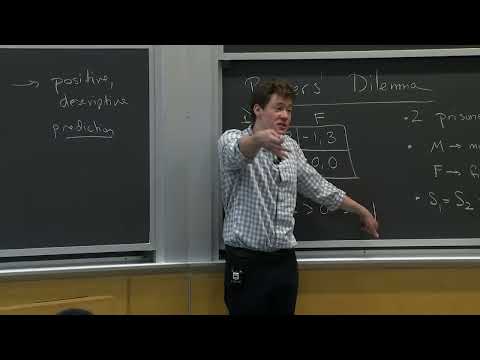
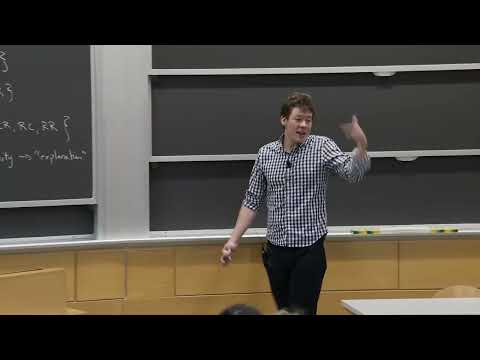
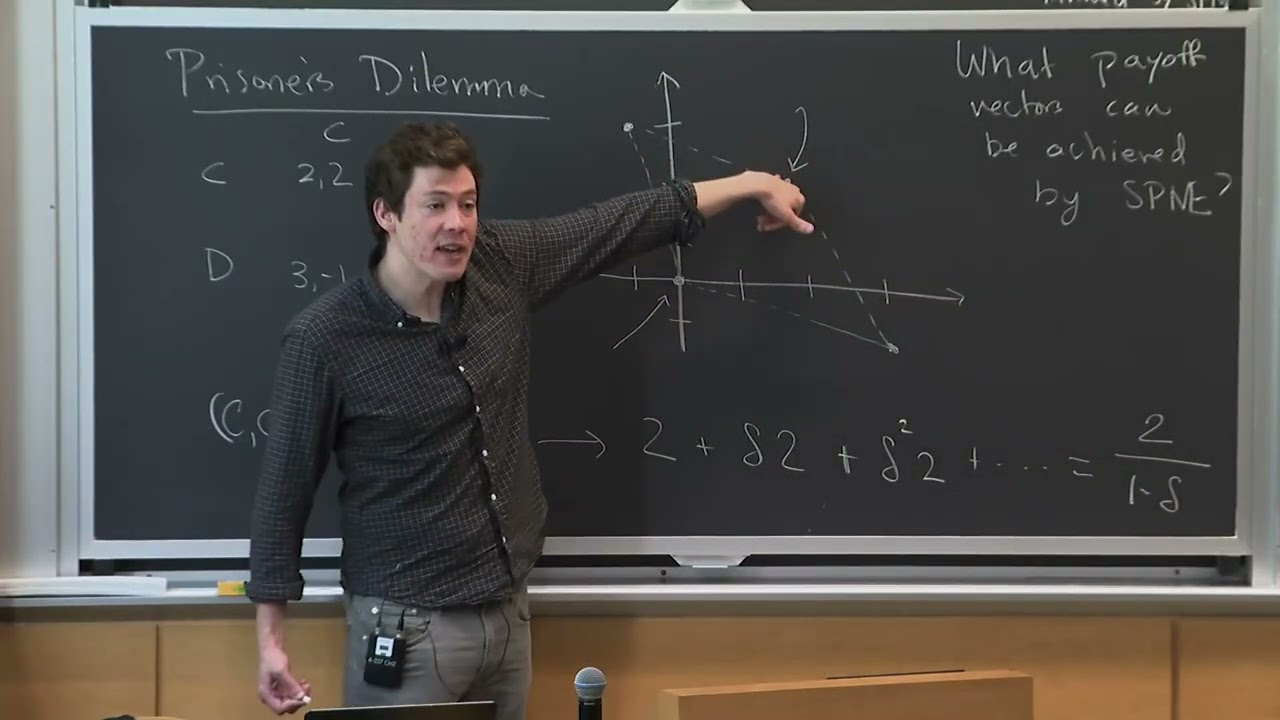
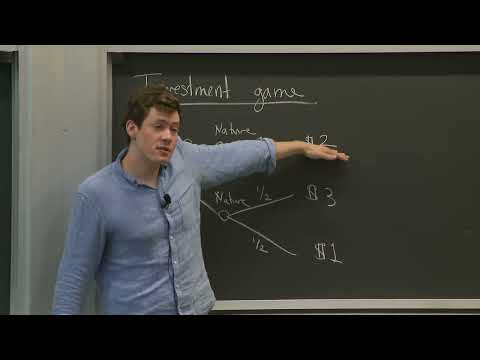
MIT economist Ian Ball teaches this session of 14.12 Economic Applications of Game Theory, covering the Folk Theorem for infinitely repeated games. He works through why, when players are patient enough, almost any feasible and individually rational payoff can be supported as a Nash or subgame perfect equilibrium. The lecture builds the logic through punishment strategies and the role of discounting, showing how the threat of future retaliation sustains cooperation that would collapse in a single shot version of the same game. Ball develops the formal conditions step by step on the board, connecting the abstract result back to real strategic settings like collusion and repeated bargaining. Runs 78 minutes as part of MIT's Fall 2025 game theory course, released through MIT OpenCourseWare.
More from this course

12 LECTURES
Introduction to Individual Decision-Making

Introduction to Individual Decision-Making

MIT · 57 MIN
Representation of Games

Representation of Games

MIT · 73 MIN
Lecture 3: Dominance

Lecture 3: Dominance

MIT · 76 MIN
Lecture 4: Rationalizability

Lecture 4: Rationalizability

MIT · 82 MIN
Lecture 5: Nash Equilibrium

Lecture 5: Nash Equilibrium

MIT · 79 MIN
Imperfect Competition

Imperfect Competition

MIT · 81 MIN
Zero-Sum Games

Zero-Sum Games

MIT · 81 MIN
Lecture 8: Backward Induction

Lecture 8: Backward Induction

MIT · 77 MIN
Lecture 9: Negotiation

Lecture 9: Negotiation

MIT · 74 MIN
Lecture 10: Subgame-Perfect Nash Equilibrium

Lecture 10: Subgame-Perfect Nash Equilibrium

MIT · 81 MIN
One-Shot Deviation Principle and Bargaining

One-Shot Deviation Principle and Bargaining

MIT · 78 MIN
Lecture 12: Finitely Repeated Games

Lecture 12: Finitely Repeated Games

MIT · 77 MIN