LECTURES A GRATIS GLOBAL SERVICE
⌕ SEARCH GRATIS GLOBAL ↗
LECTURES
Lecture 25: Common Knowledge
SOURCE: YOUTUBE · NO TRACKING UNTIL YOU PRESS PLAY · TROUBLE PLAYING? WATCH AT THE SOURCE ↗

Lecture 25: Common Knowledge

58 MIN · EN · STATUS: [ STREAMING ]
RATE THIS
MIT · Economic Applications of Game Theory · LECTURE 25

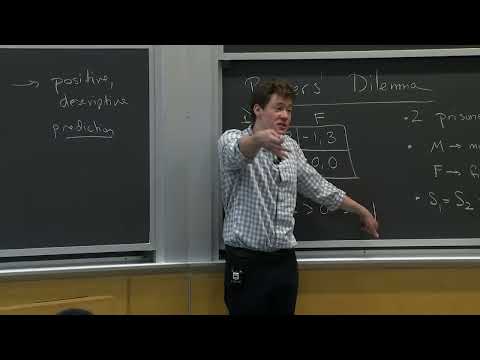
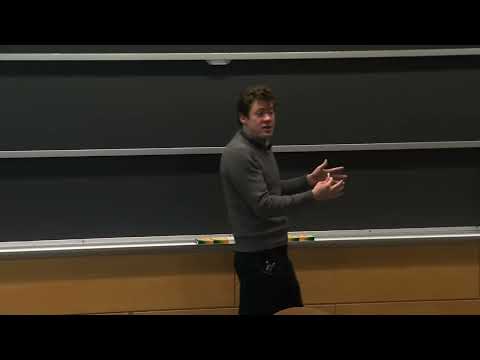
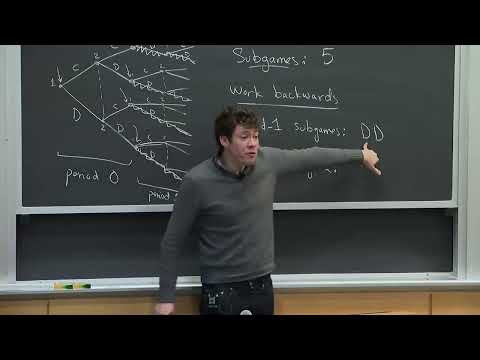
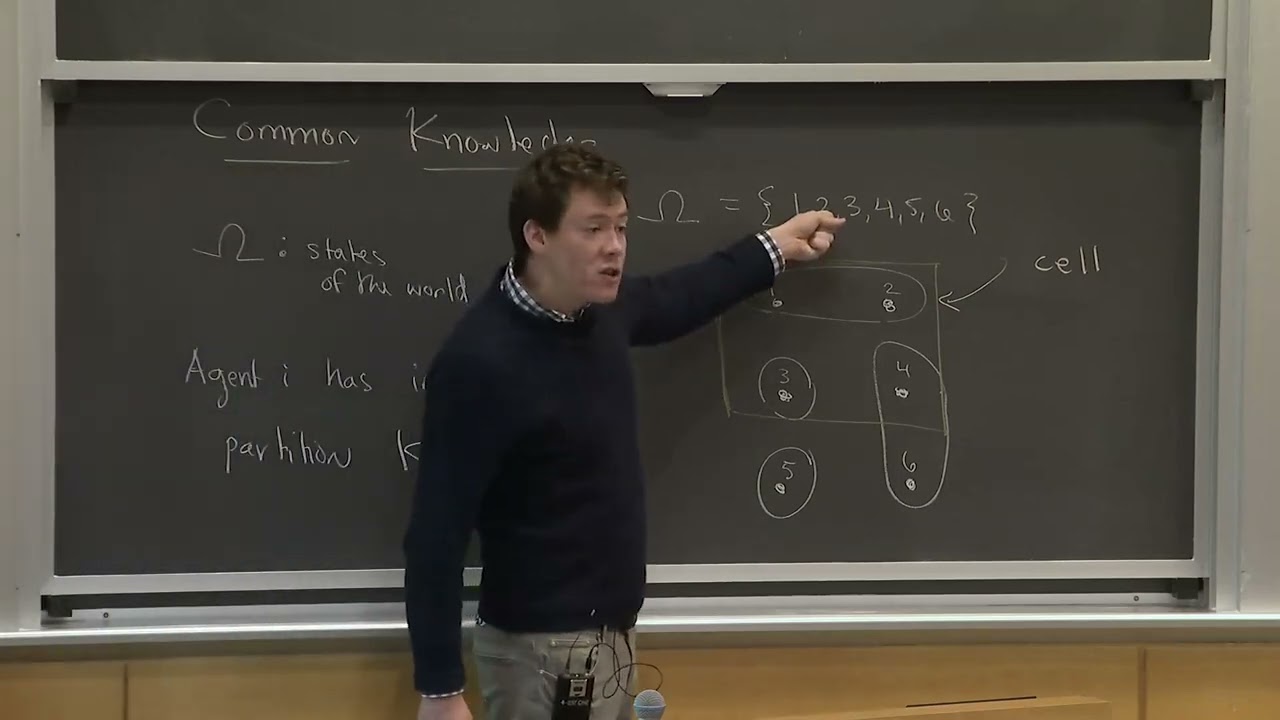
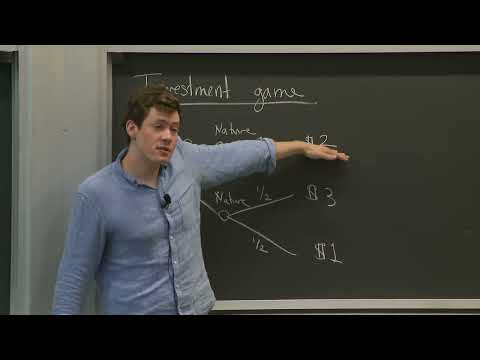
Ian Ball closes MIT's 14.12 Economic Applications of Game Theory with the concept of common knowledge, the idea that all players not only know a fact but know that everyone else knows it, and know that everyone knows they know it, in an infinite regress. He works through why this recursive structure matters for strategic reasoning, distinguishing common knowledge from mere mutual knowledge and showing how the gap between the two changes what rational players can conclude from observing each other's actions. Expect blackboard derivations and formal examples rather than slides, consistent with the course's style, building on the semester's earlier game-theoretic tools to show how epistemic assumptions shape equilibrium outcomes. As the final lecture of the term, it serves as a capstone on how information structure, not just payoffs, drives strategic behavior in economic models.
More from this course

12 LECTURES
Introduction to Individual Decision-Making

Introduction to Individual Decision-Making

MIT · 57 MIN
Representation of Games

Representation of Games

MIT · 73 MIN
Lecture 3: Dominance

Lecture 3: Dominance

MIT · 76 MIN
Lecture 4: Rationalizability

Lecture 4: Rationalizability

MIT · 82 MIN
Lecture 5: Nash Equilibrium

Lecture 5: Nash Equilibrium

MIT · 79 MIN
Imperfect Competition

Imperfect Competition

MIT · 81 MIN
Zero-Sum Games

Zero-Sum Games

MIT · 81 MIN
Lecture 8: Backward Induction

Lecture 8: Backward Induction

MIT · 77 MIN
Lecture 9: Negotiation

Lecture 9: Negotiation

MIT · 74 MIN
Lecture 10: Subgame-Perfect Nash Equilibrium

Lecture 10: Subgame-Perfect Nash Equilibrium

MIT · 81 MIN
One-Shot Deviation Principle and Bargaining

One-Shot Deviation Principle and Bargaining

MIT · 78 MIN
Lecture 12: Finitely Repeated Games

Lecture 12: Finitely Repeated Games

MIT · 77 MIN