Exchanges, Brokers, Dealers, Clearinghouses
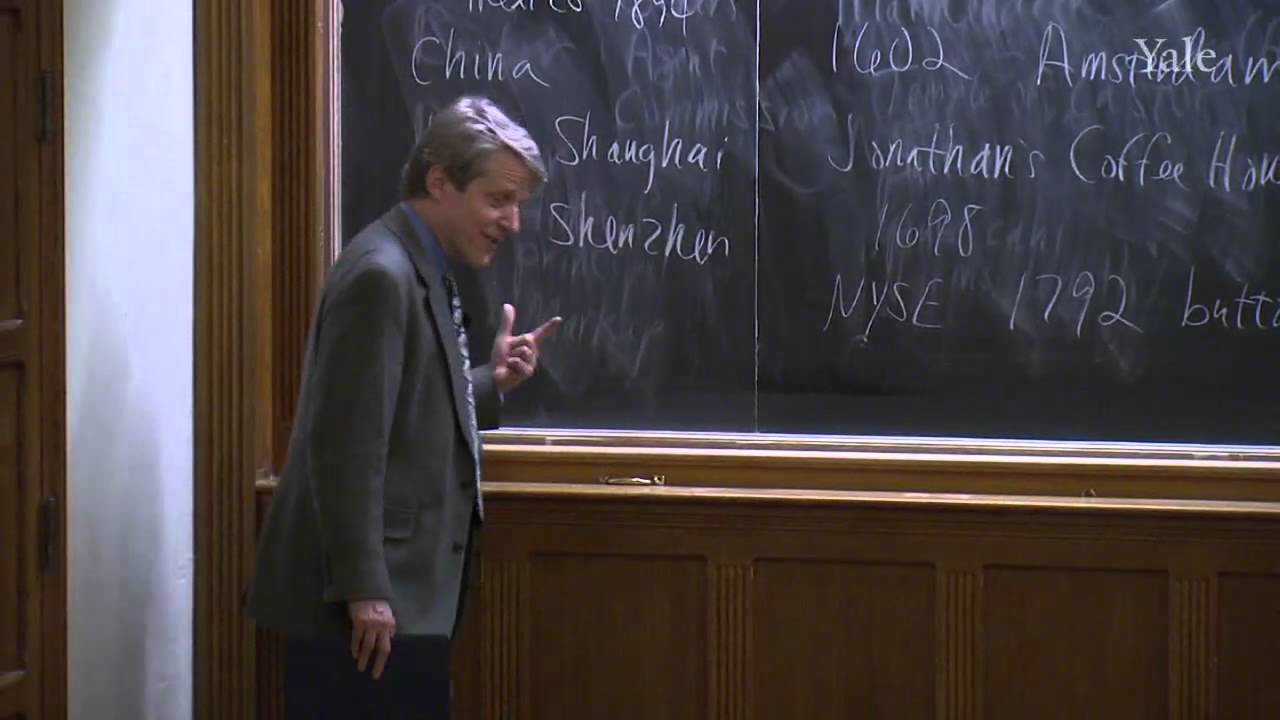
Robert Shiller, teaching Yale's Financial Markets course, examines how securities exchanges actually work. He opens by framing economics as the study of exchange rather than just resource allocation, then distinguishes brokers from dealers before tracing exchange history from ancient Rome through Amsterdam's stock exchange and London's Jonathan's Coffee House to the New York Stock Exchange, with stops in India, China, Brazil, and Mexico. Using a limit order book example, he explains trading mechanics on NASDAQ, then turns to program trading and high frequency trading, weighing their role in the 1987 crash and the 2010 Flash Crash. He discusses fairness questions between brokers and private investors through the National Market System and Intermarket Trading System, and closes with reflections on inside information and the Gambler's Ruin problem facing dealers. Recorded in spring 2011, this is lecture 21 of the series.