LECTURES A GRATIS GLOBAL SERVICE
⌕ SEARCH GRATIS GLOBAL ↗
LECTURES
Carbocations and the Mechanism of Electrophilic Addition to Alkenes and Alkynes
SOURCE: YOUTUBE · NO TRACKING UNTIL YOU PRESS PLAY · TROUBLE PLAYING? WATCH AT THE SOURCE ↗

Carbocations and the Mechanism of Electrophilic Addition to Alkenes and Alkynes

52 MIN · EN · STATUS: [ STREAMING ]
RATE THIS
YALE · Freshman Organic Chemistry II with Michael McBride · LECTURE 11

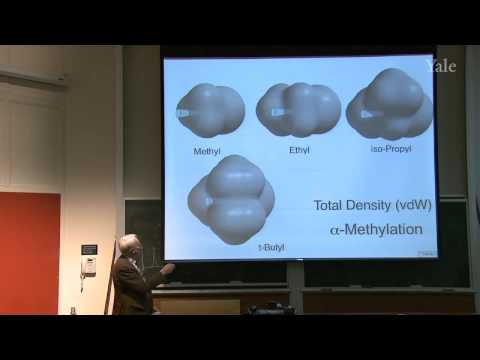
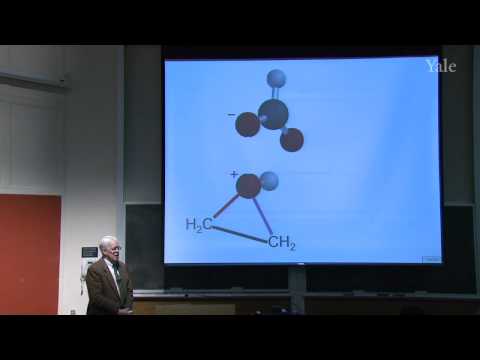
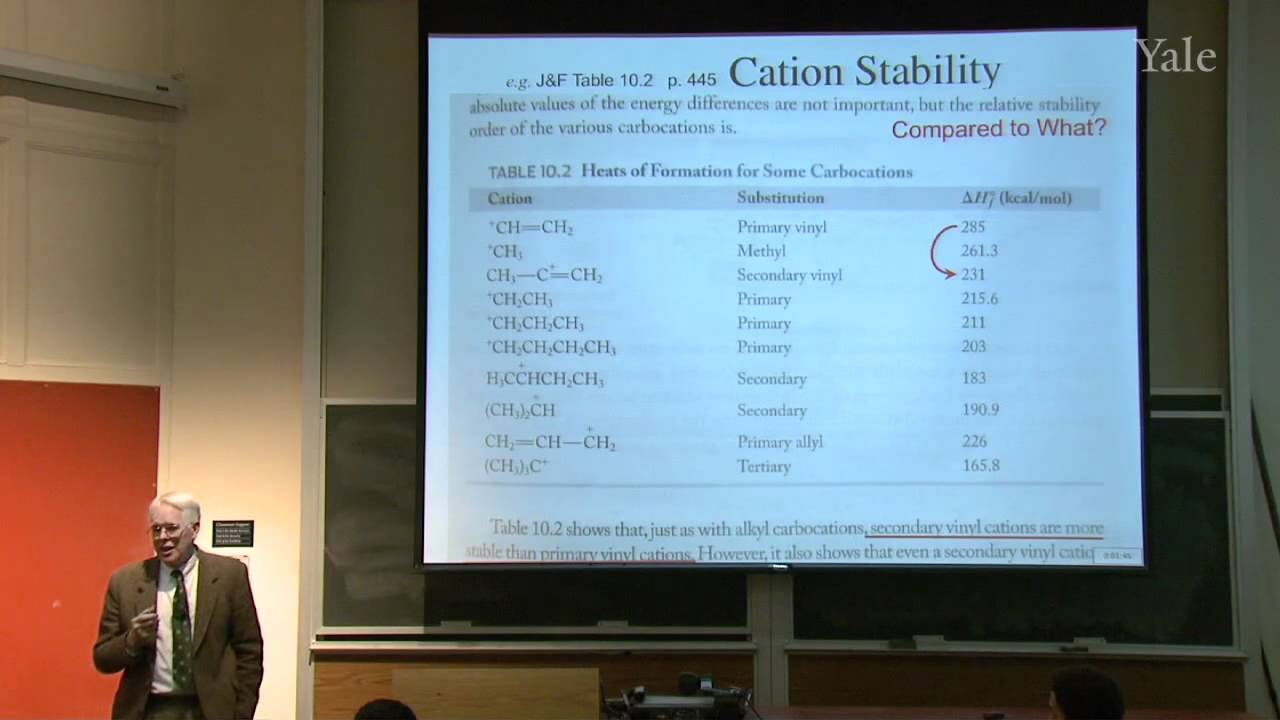
Michael McBride lectures on electrophilic addition mechanisms in Yale's Freshman Organic Chemistry II (CHEM 125B). He opens with alkene thermochemistry and the thermodynamics of acid addition, then walks through free-radical, metal-catalyzed, and stepwise electrophilic pathways, the last proceeding through a cation intermediate. McBride explains how electrostatics position an attacking proton but orbital mixing determines the more stable cation and thus Markovnikov selectivity, drawing on hyperconjugation, hybridization, and solvation to rank carbocation stability. He covers methide shifts as a competing pathway to solvent trapping and closes by examining the puzzling relative rates of HCl and HBr addition to alkynes, where halogen substituents act as both electron donors and electron withdrawers. Recorded in spring 2011 as part of the Open Yale Courses series, the lecture runs just under an hour and includes chapter markers for each topic.
More from this course

12 LECTURES
Mechanism: How Energies and Kinetic Order Influence Reaction Rates

Mechanism: How Energies and Kinetic Order Influence Reaction Rates

YALE · 49 MIN
Peculiar Rate Laws, Bond Dissociation Energies, and Relative Reactivities

Peculiar Rate Laws, Bond Dissociation Energies, and Relative Reactivities

YALE · 48 MIN
Rate and Selectivity in Radical-Chain Reactions

Rate and Selectivity in Radical-Chain Reactions

YALE · 47 MIN
Electronegativity, Bond Strength, Electrostatics, and Non-Bonded Interactions

Electronegativity, Bond Strength, Electrostatics, and Non-Bonded Interactions

YALE · 50 MIN
Solvation, H-Bonding, and Ionophores

Solvation, H-Bonding, and Ionophores

YALE · 47 MIN
Brønsted Acidity and the Generality of Nucleophilic Substitution

Brønsted Acidity and the Generality of Nucleophilic Substitution

YALE · 47 MIN
Nucleophilic Substitution Tools: Stereochemistry, Rate Law, Substrate, Nucleophile

Nucleophilic Substitution Tools: Stereochemistry, Rate Law, Substrate, Nucleophile

YALE · 52 MIN
Solvent, Leaving Group, Bridgehead Substitution, and Pentavalent Carbon

Solvent, Leaving Group, Bridgehead Substitution, and Pentavalent Carbon

YALE · 48 MIN
Pentavalent Carbon? E2, SN1, E1

Pentavalent Carbon? E2, SN1, E1

YALE · 48 MIN
Cation Intermediates. Alkenes: Formation, Addition, and Stability

Cation Intermediates. Alkenes: Formation, Addition, and Stability

YALE · 51 MIN
Nucleophilic Participation During Electrophilic Addition to Alkenes

Nucleophilic Participation During Electrophilic Addition to Alkenes

YALE · 49 MIN
Addition to Form Three-Membered Rings: Carbenoids and Epoxidation

Addition to Form Three-Membered Rings: Carbenoids and Epoxidation

YALE · 51 MIN