LECTURES A GRATIS GLOBAL SERVICE
⌕ SEARCH GRATIS GLOBAL ↗
LECTURES
Nucleophilic Participation During Electrophilic Addition to Alkenes
SOURCE: YOUTUBE · NO TRACKING UNTIL YOU PRESS PLAY · TROUBLE PLAYING? WATCH AT THE SOURCE ↗

Nucleophilic Participation During Electrophilic Addition to Alkenes

49 MIN · EN · STATUS: [ STREAMING ]
RATE THIS
YALE · Freshman Organic Chemistry II with Michael McBride · LECTURE 12

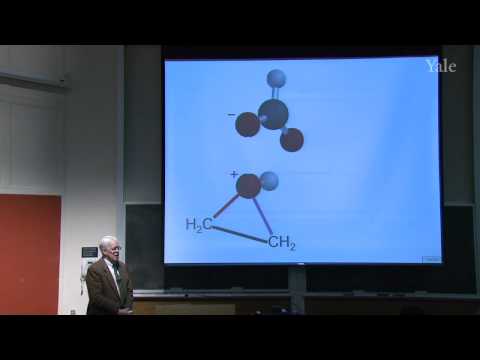
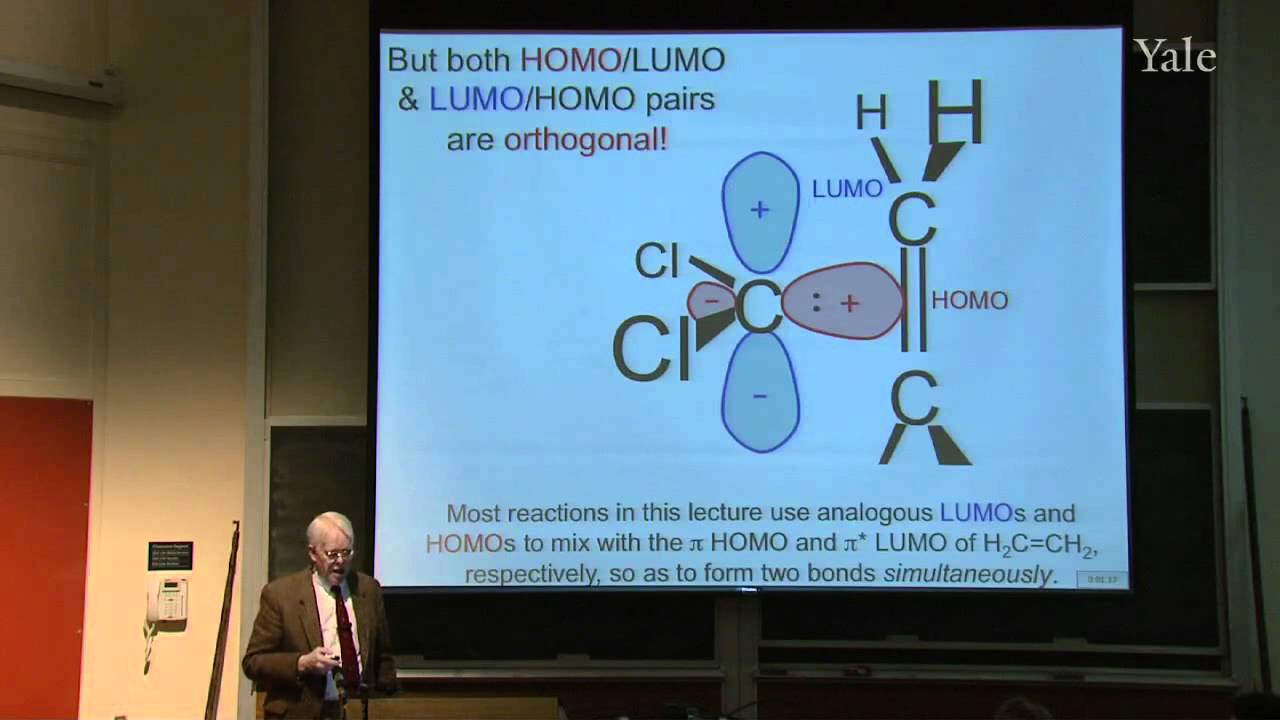
Michael McBride continues Yale's Freshman Organic Chemistry II with a lecture on how electrophilic addition to alkenes can avoid skeletal rearrangement when a nucleophile participates simultaneously with the electrophile. He covers Markovnikov hydration via hydroxymercuration, the three-membered-ring halonium ion mechanism for halogen addition, cyclopropane formation from carbenes and what its stereochemistry reveals about simultaneous bond formation, and anti-Markovnikov hydration through hydroboration followed by oxidation with hydroperoxide. McBride draws an orbital analogy between the frontside C-O bond formation in the borane hydroperoxide rearrangement and backside attack in SN2 substitution, using syn-addition as evidence that nucleophilic and electrophilic attack occur together rather than through a free carbocation. The lecture is organized into four chapters moving from hydroxymercuration through halonium ions, carbenes, and hydroboration-oxidation, recorded as part of the Open Yale Courses series.
More from this course

12 LECTURES
Mechanism: How Energies and Kinetic Order Influence Reaction Rates

Mechanism: How Energies and Kinetic Order Influence Reaction Rates

YALE · 49 MIN
Peculiar Rate Laws, Bond Dissociation Energies, and Relative Reactivities

Peculiar Rate Laws, Bond Dissociation Energies, and Relative Reactivities

YALE · 48 MIN
Rate and Selectivity in Radical-Chain Reactions

Rate and Selectivity in Radical-Chain Reactions

YALE · 47 MIN
Electronegativity, Bond Strength, Electrostatics, and Non-Bonded Interactions

Electronegativity, Bond Strength, Electrostatics, and Non-Bonded Interactions

YALE · 50 MIN
Solvation, H-Bonding, and Ionophores

Solvation, H-Bonding, and Ionophores

YALE · 47 MIN
Brønsted Acidity and the Generality of Nucleophilic Substitution

Brønsted Acidity and the Generality of Nucleophilic Substitution

YALE · 47 MIN
Nucleophilic Substitution Tools: Stereochemistry, Rate Law, Substrate, Nucleophile

Nucleophilic Substitution Tools: Stereochemistry, Rate Law, Substrate, Nucleophile

YALE · 52 MIN
Solvent, Leaving Group, Bridgehead Substitution, and Pentavalent Carbon

Solvent, Leaving Group, Bridgehead Substitution, and Pentavalent Carbon

YALE · 48 MIN
Pentavalent Carbon? E2, SN1, E1

Pentavalent Carbon? E2, SN1, E1

YALE · 48 MIN
Cation Intermediates. Alkenes: Formation, Addition, and Stability

Cation Intermediates. Alkenes: Formation, Addition, and Stability

YALE · 51 MIN
Carbocations and the Mechanism of Electrophilic Addition to Alkenes and Alkynes

Carbocations and the Mechanism of Electrophilic Addition to Alkenes and Alkynes

YALE · 52 MIN
Addition to Form Three-Membered Rings: Carbenoids and Epoxidation

Addition to Form Three-Membered Rings: Carbenoids and Epoxidation

YALE · 51 MIN