Solvent, Leaving Group, Bridgehead Substitution, and Pentavalent Carbon
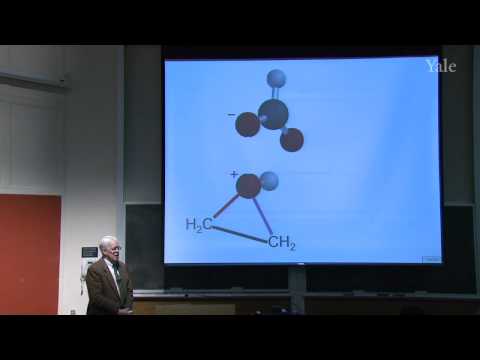
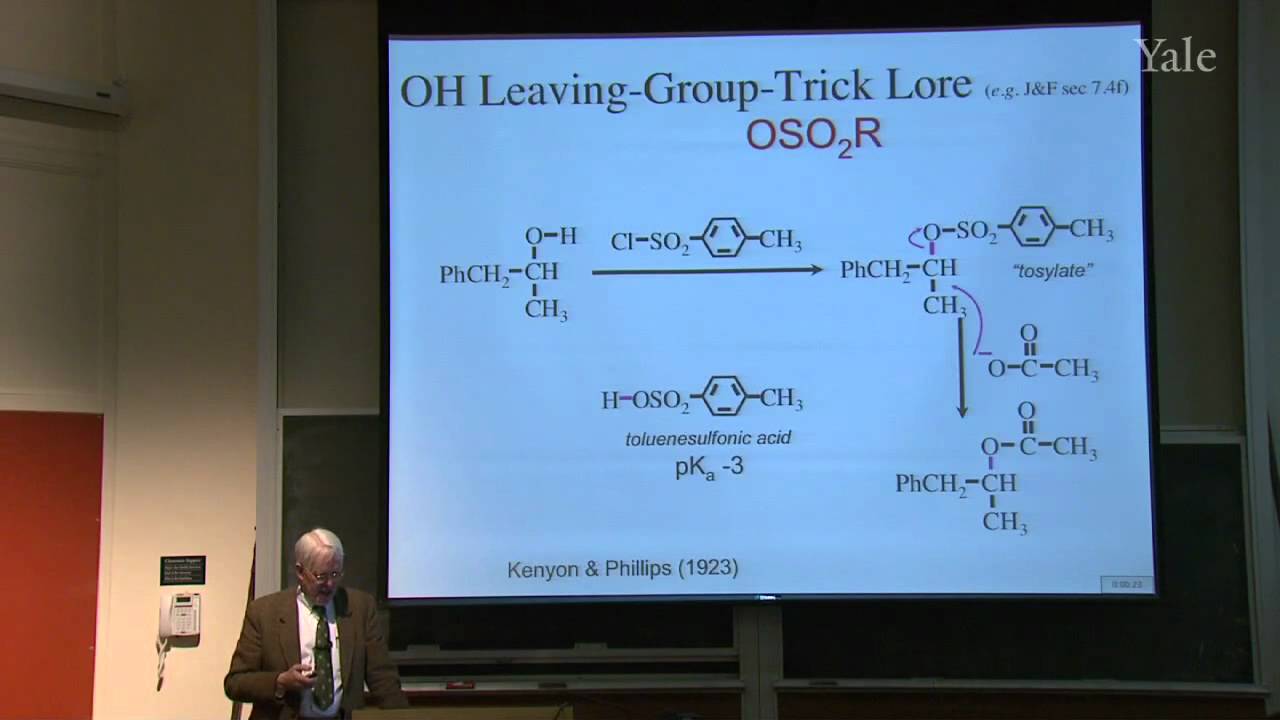
Michael McBride continues Yale's Freshman Organic Chemistry II with a lecture on SN2 reaction mechanics. He examines how solvent choice, especially hydrogen-bonding solvents, alters nucleophile reactivity, and why strong nucleophiles or bases often make poor leaving groups. The lecture covers converting hydroxyl and amino groups, normally poor leaving groups, into ones that depart easily, even at bridgehead carbons. A worked example on designing a radioactive fluorine-labeled sugar analogue shows how SN2 chemistry underlies PET scanning in medical imaging. McBride closes with quantum mechanical evidence addressing whether the pentavalent carbon species along the SN2 pathway is a genuine stable intermediate or only a transition state. Recorded in Spring 2011 as part of the Open Yale Courses series, the talk moves from mechanism to real-world application to theoretical resolution across five chapters.