Epoxide Opening, Dipolar Cycloaddition, and Ozonolysis
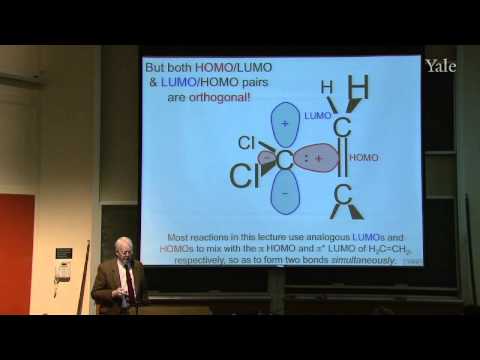
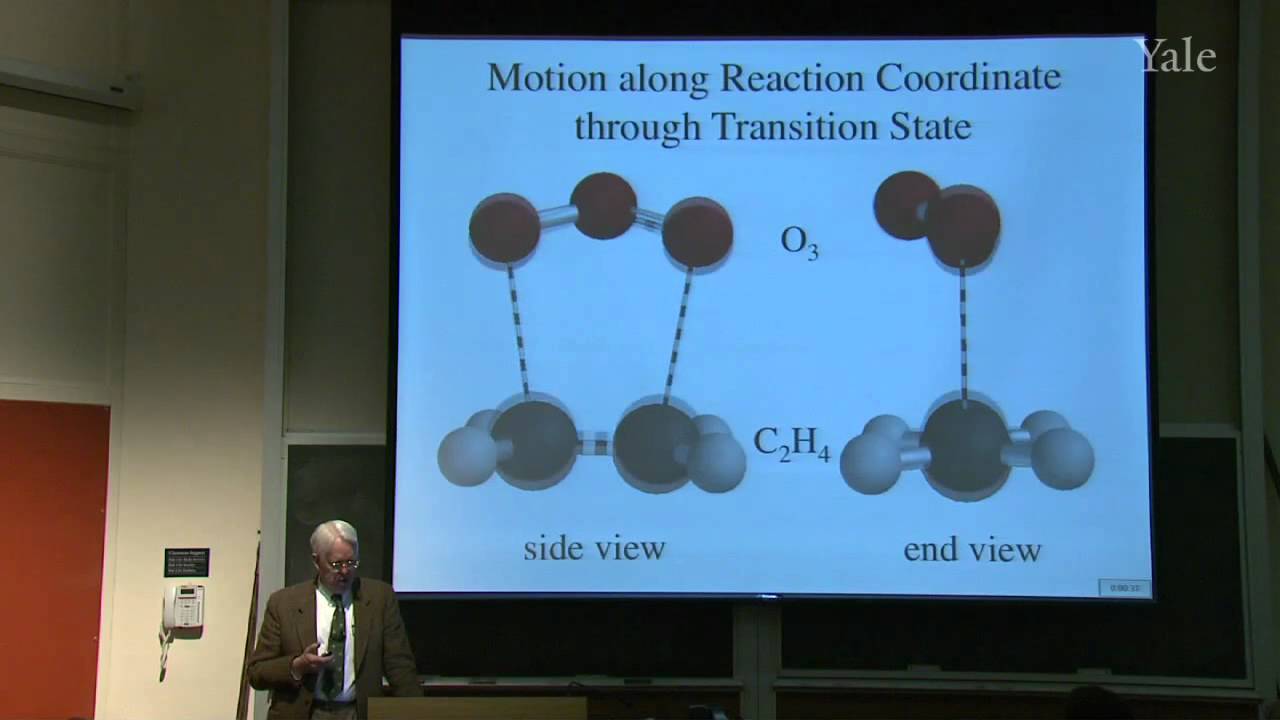
Michael McBride continues Yale's Freshman Organic Chemistry II (CHEM 125B) with a lecture on epoxide ring opening, ozonolysis, and related addition mechanisms. He examines the regiospecificity of acid- and base-catalyzed epoxide opening, questioning how textbooks draw curved arrows and whether thin experimental data supports the conclusions drawn from it. The lecture covers ozonolysis of alkenes through a series of 1,3-dipolar cycloadditions analyzed via HOMO-LUMO symmetry matching, followed by acetal hydrolysis and reduction or oxidation to reach the final product. McBride also argues that addition to the C=O bond, though usually treated as nucleophilic, carries a significant electrophilic component that parallels electrophilic addition to C=C bonds discussed elsewhere in the course. The lecture closes with alkene dihydroxylation via OsO4 cycloaddition, introducing how metals grant access to orbitals of the needed symmetry. Recorded in Spring 2011 as part of Open Yale Courses.