Isoprenoids, Rubber, and Tuning Polymer Properties
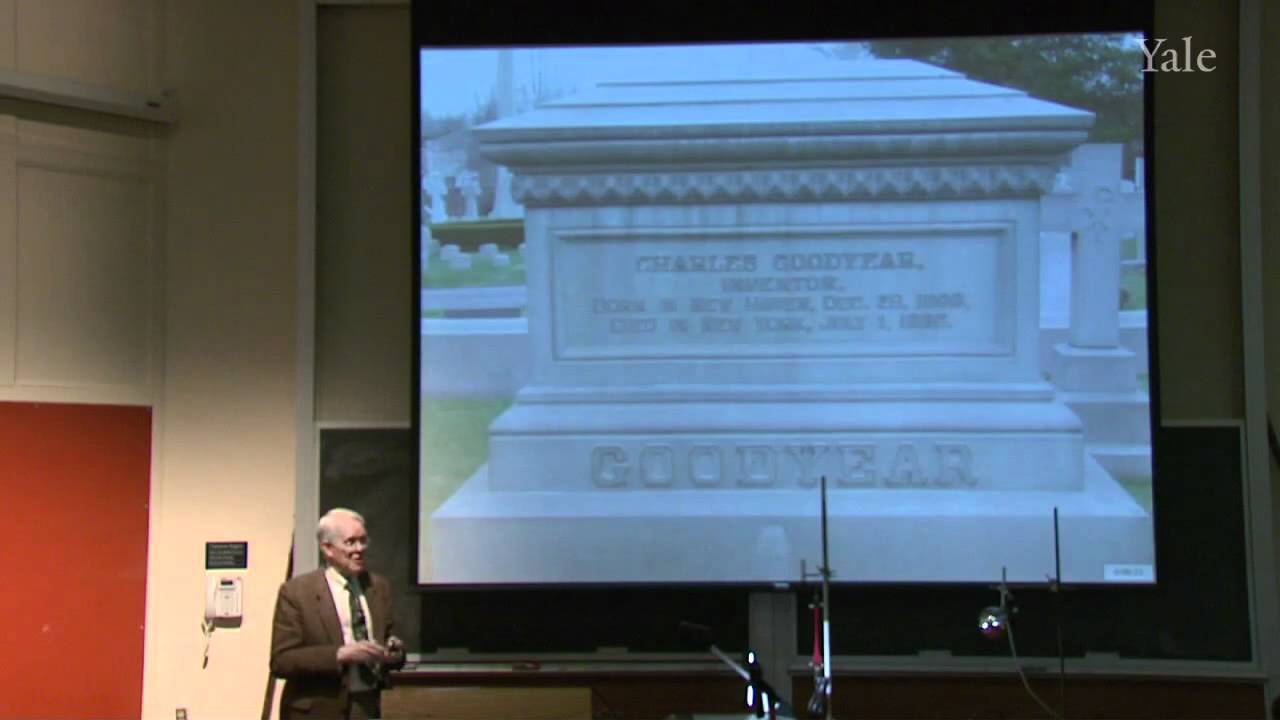
Michael McBride's Yale organic chemistry lecture traces how isoprenoid natural products form from oligomerization of isopentenyl pyrophosphate (IPP), the electrophilic building block behind terpenes and latex. He connects that biosynthesis to Charles Goodyear's discovery of vulcanization, explaining why stretched rubber contracts when heated through statistical mechanics rather than ordinary thermal expansion. The lecture then widens to other polymers, including hair keratin and synthetic plastics, showing how specific chemical treatments tune their mechanical properties. It closes with copolymer structure, using non-Hammond behavior and ionic character in free-radical polymerization transition states to explain how monomer sequence arises. Recorded in 2011 as part of Yale's Freshman Organic Chemistry II course, the talk moves from biochemical mechanism to industrial history to physical chemistry in under fifty minutes, with chapter breaks marking each shift in subject.