Mechanism and Equilibrium of Carbonyl Reactions
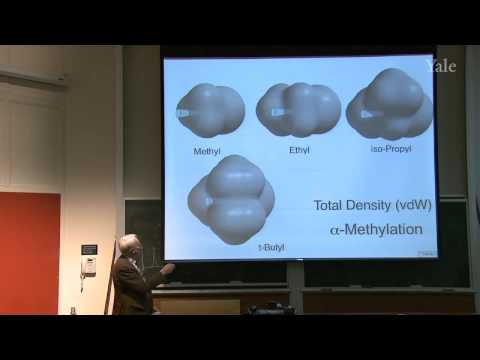
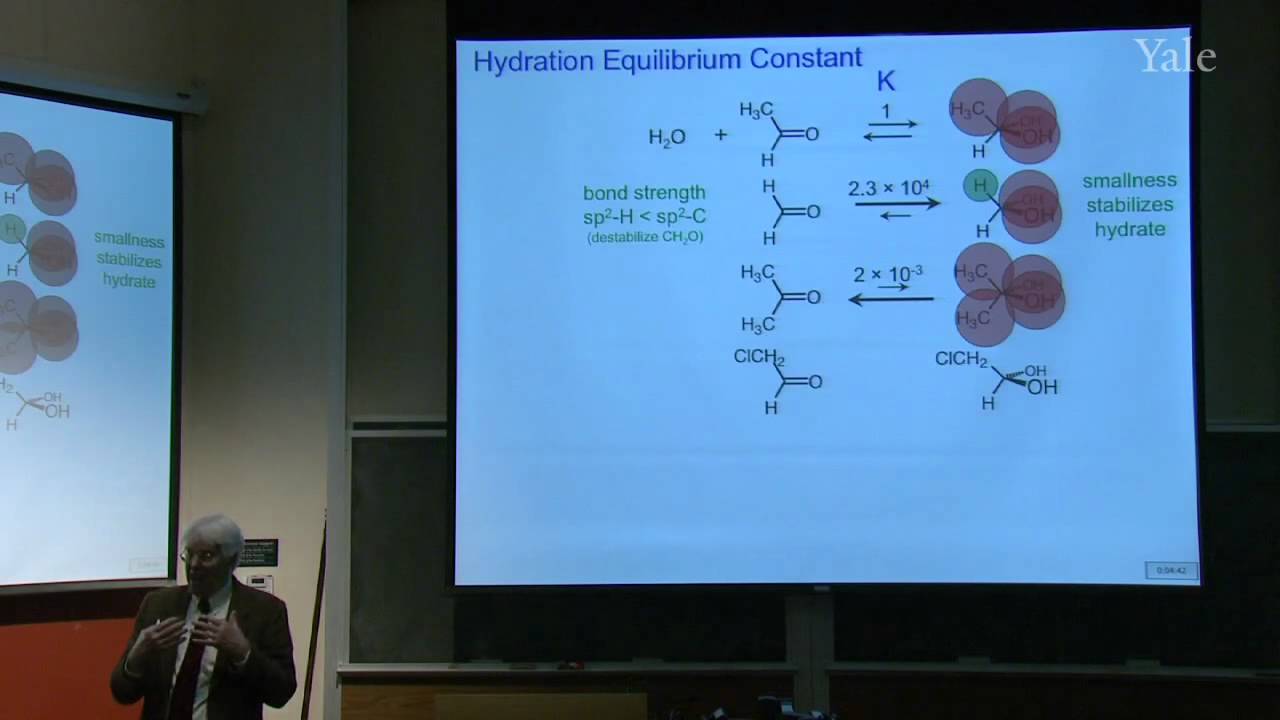
Michael McBride continues Yale's Freshman Organic Chemistry II (CHEM 125B) with a lecture on acid- and base-catalyzed mechanisms for carbonyl compounds, carboxylic acids, and their derivatives. He shows how steric hindrance can block the addition/decomposition (A/D) pathway of Fischer esterification while an acid-catalyzed D/A route still proceeds, then examines four substituent effects on carbonyl hydration equilibria: bond strength, steric bulk, electron withdrawal, and conjugation. The lecture turns to cyclic acetals as protecting groups for sugar carbonyls, extends the idea to protecting alcohols with acetals and silyl ethers, and closes with the conversion of carbonyl compounds to imines through carbinolamine intermediates using amines instead of alcohols. Recorded in spring 2011 as part of the Open Yale Courses series, the talk builds mechanistic reasoning step by step on the board.