Appellate and Post-Conviction Review
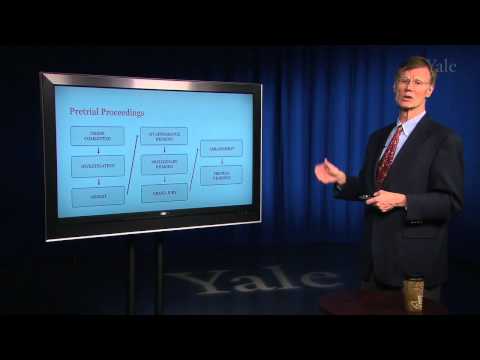
Stephen Bright, teaching Yale's course on Capital Punishment: Race, Poverty, and Disadvantage, walks through what happens after a defendant is sentenced to death at trial. He lays out the stages of appellate and post-conviction review, the procedural obstacles that can keep a court from ever reaching a claim, and the burdens of proof and standards of review that apply at each stage. Bright explains when an error requires a case to be reversed and when courts instead apply the doctrine of harmless error, letting a conviction and death sentence stand even where a constitutional violation occurred. The session is built around the mechanics of the system rather than any single case, tracing how procedural rules can determine outcomes as much as the underlying facts do. It draws on assigned readings covering the review process in detail, making the case that access to appellate review is far narrower than most people assume.