Making Amends, Part 1
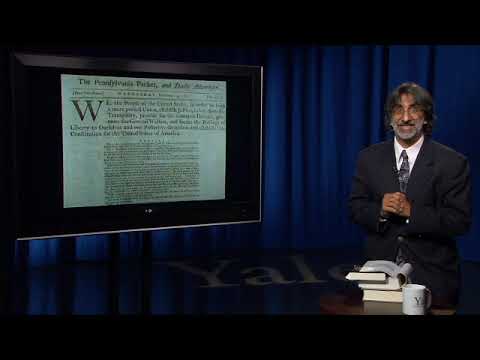
Akhil Reed Amar, teaching Yale's America's Written Constitution course, opens the turn from the founding text to its amendments. He points out that the federal Constitution appends amendments in chronological order rather than weaving them into the original text, as most state constitutions do, and argues this makes the document an intergenerational project rather than a single founders' achievement. He traces that project forward: a revolution organized around stated principles that avoided devolving into bloodshed or dictatorship, state constitutions as an early testing ground, continental ratification, and the Louisiana Purchase, which he contends mattered more constitutionally in 1803 than Marbury v. Madison. The lecture moves on to the commitment to admit new territories as equal states, the long effort to end slavery, and closes with the claim that a nation still built on racial hierarchy could not have resisted Nazism the way America did.