Berzelius to Liebig and Wöhler (1805-1832)
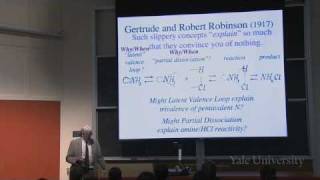
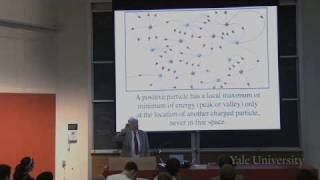
Yale's Freshman Organic Chemistry course, taught by J. Michael McBride, traces the generation of chemists following Lavoisier. The lecture opens with Berzelius in Sweden working alongside Gay-Lussac in Paris and Davy in London, discovering new elements and refining atomic weights and combustion analysis for organic compounds. McBride explains how Berzelius's invention of electrolysis fed into the theory of dualism, with elements bound by electrostatic attraction. He then turns to Wohler's synthesis of urea from ammonium cyanate, a result that exposed isomerism while also showing a surprising carelessness with quantitative data. The lecture closes with Wohler and Liebig's joint study of oil of bitter almonds, which extended dualism into organic chemistry through the radical theory. Chapter markers break the hour into atomic weight confusion, electrolysis, dualism, quantitative naivety, urea and isomerism, and the transmission of dualism via radical theory.