Distributive Justice and the Welfare State
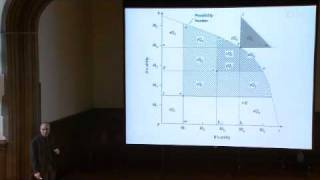
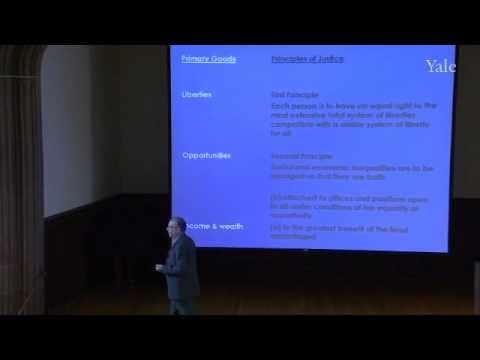
Ian Shapiro continues his Yale course on the moral foundations of politics with a lecture on Rawls's difference principle, the rule that income and wealth should be arranged to the greatest benefit of the least advantaged. Shapiro traces the chain of reasoning that links the least advantaged to the second-least and on up the ladder, then tests it against hard cases: what happens when a small gain for the worst-off comes at a large cost to everyone else. He compares the difference principle against Bentham's utilitarianism and Pareto efficiency, arguing it is not especially radical in redistributive terms but is radical philosophically, since it treats differences in talent and family background as morally arbitrary. The lecture presses on an awkward consequence, whether effort itself, the choice to work hard versus watch television, can really be separated from the capacities Rawls wants to neutralize. Chapters cover liberty, fair equality of opportunity, and the distribution of income and wealth.