The "Political-not-Metaphysical" Legacy
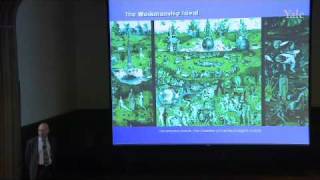
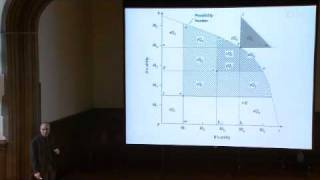
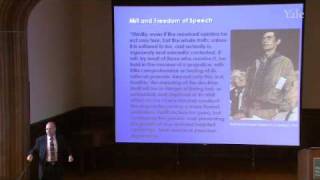
Ian Shapiro closes Yale's Moral Foundations of Politics course by tracing how Rawls's later work, with its turn to an overlapping consensus and a political rather than metaphysical justification, marks a real break from Enlightenment political theory. Shapiro recaps the course's arc from Locke through Bentham, Mill, and Marx, tracking two Enlightenment commitments: science and reason as the basis of politics, and individual rights grounded in a secularized workmanship ideal. He shows how the early Enlightenment's faith in scientific certainty gave way, starting with Mill, to an acknowledgment of science's fallibility, and how later efforts to secularize Locke's rights framework ran into trouble, culminating in Marx's critiques and the unsettling implications of Rawls's moral arbitrariness argument. The lecture ends by introducing the anti-Enlightenment backlash as a response to these unresolved tensions. Recorded in Spring 2010, it serves as both a synthesis of the semester and a bridge to the course's final topics.