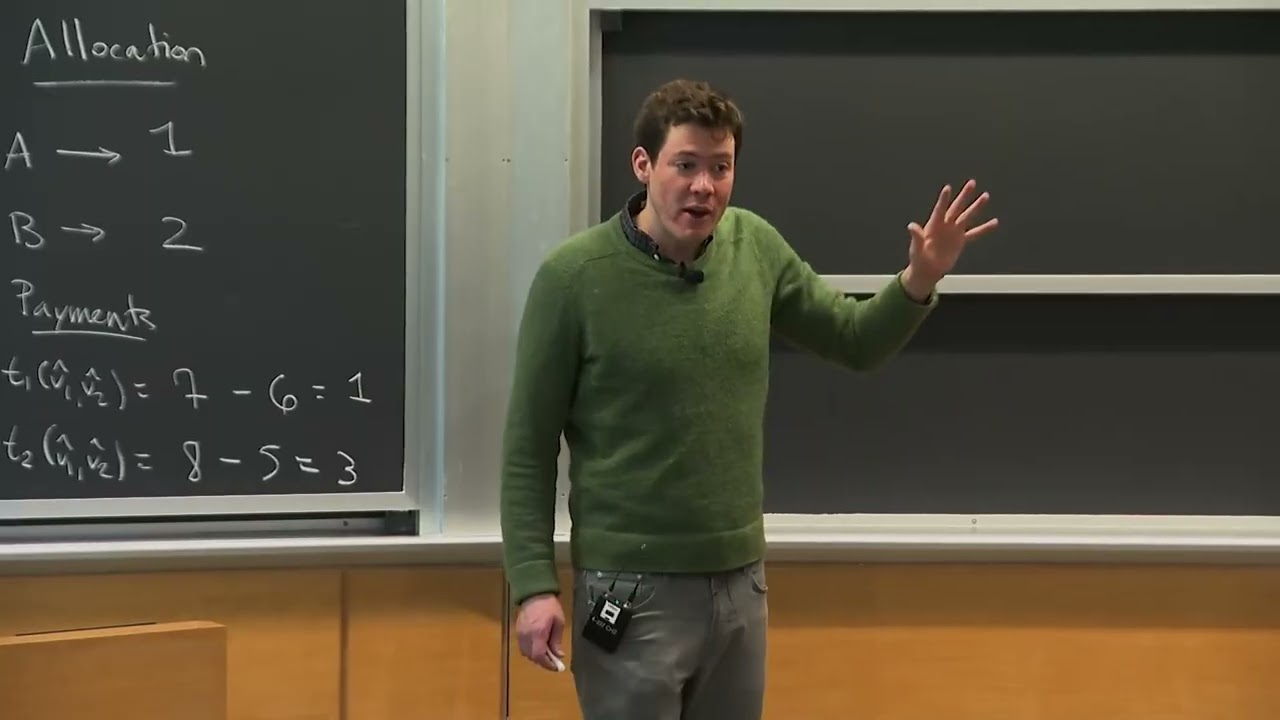
Lecture 21: Perfect Bayesian Equilibrium
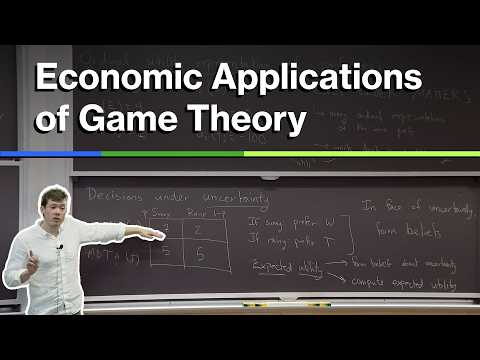
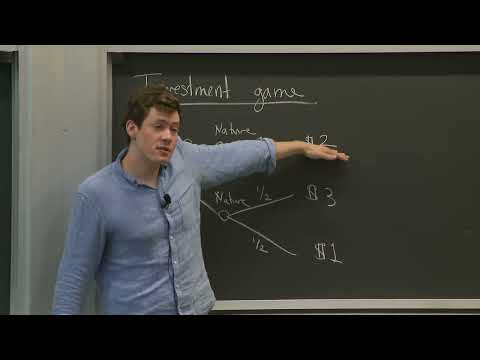
Ian Ball teaches this session of MIT's 14.12 Economic Applications of Game Theory, working through a Vickrey-Clarke-Groves (VCG) auction example before turning to dynamic Bayesian games. The lecture builds toward perfect Bayesian equilibrium, the solution concept economists use when players move sequentially under incomplete information and must update beliefs about each other as the game unfolds. Ball develops the formal machinery on the board, connecting the auction mechanism discussion to the broader question of how rational agents form and revise beliefs in multi-stage strategic settings. Runs 76 minutes as part of the Fall 2025 offering of MIT's graduate game theory course, continuing a numbered lecture sequence that assumes familiarity with static Bayesian games and standard equilibrium concepts covered earlier in the term.